Alessandro Nisi, Francesca Nizzero
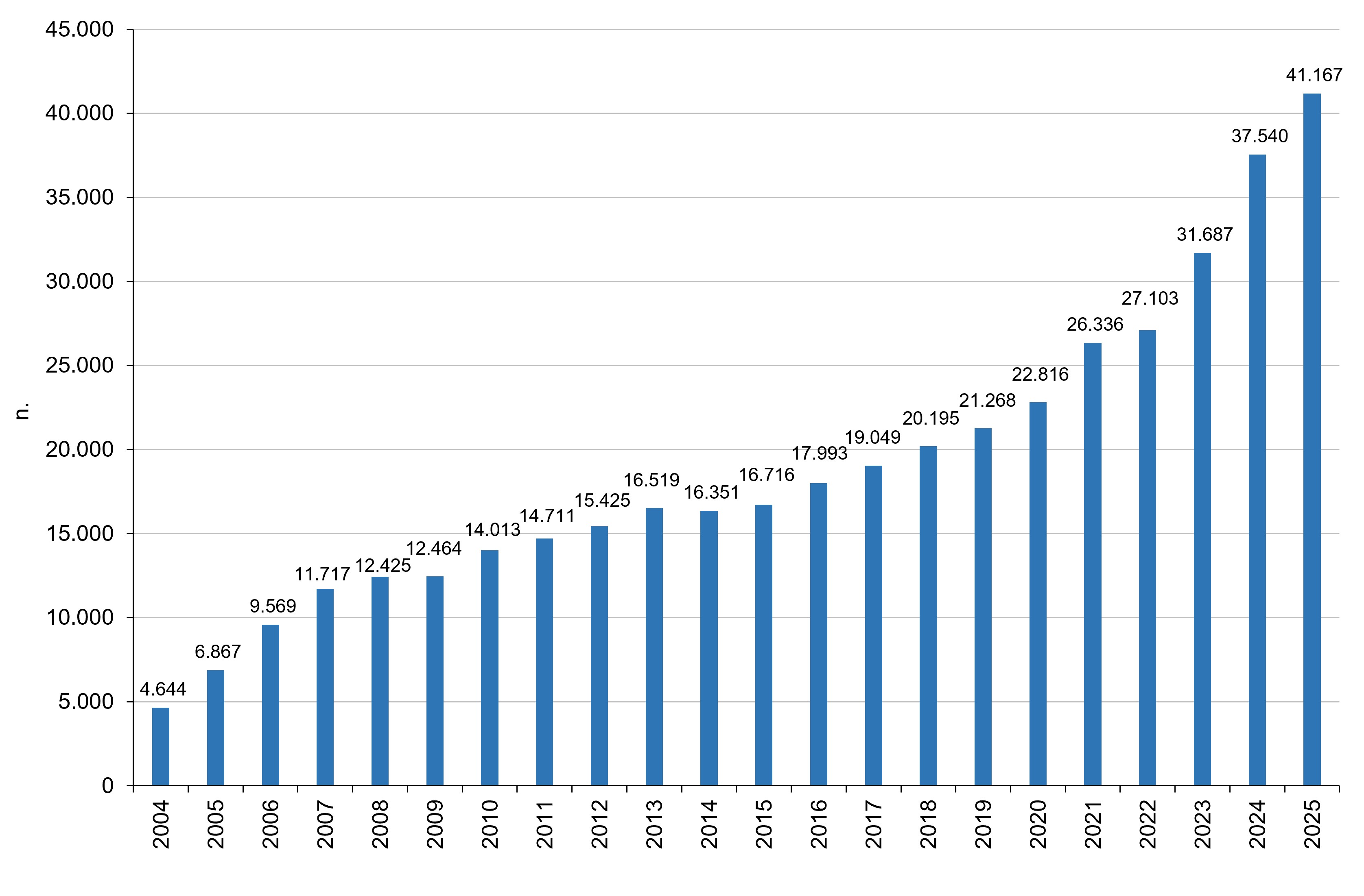
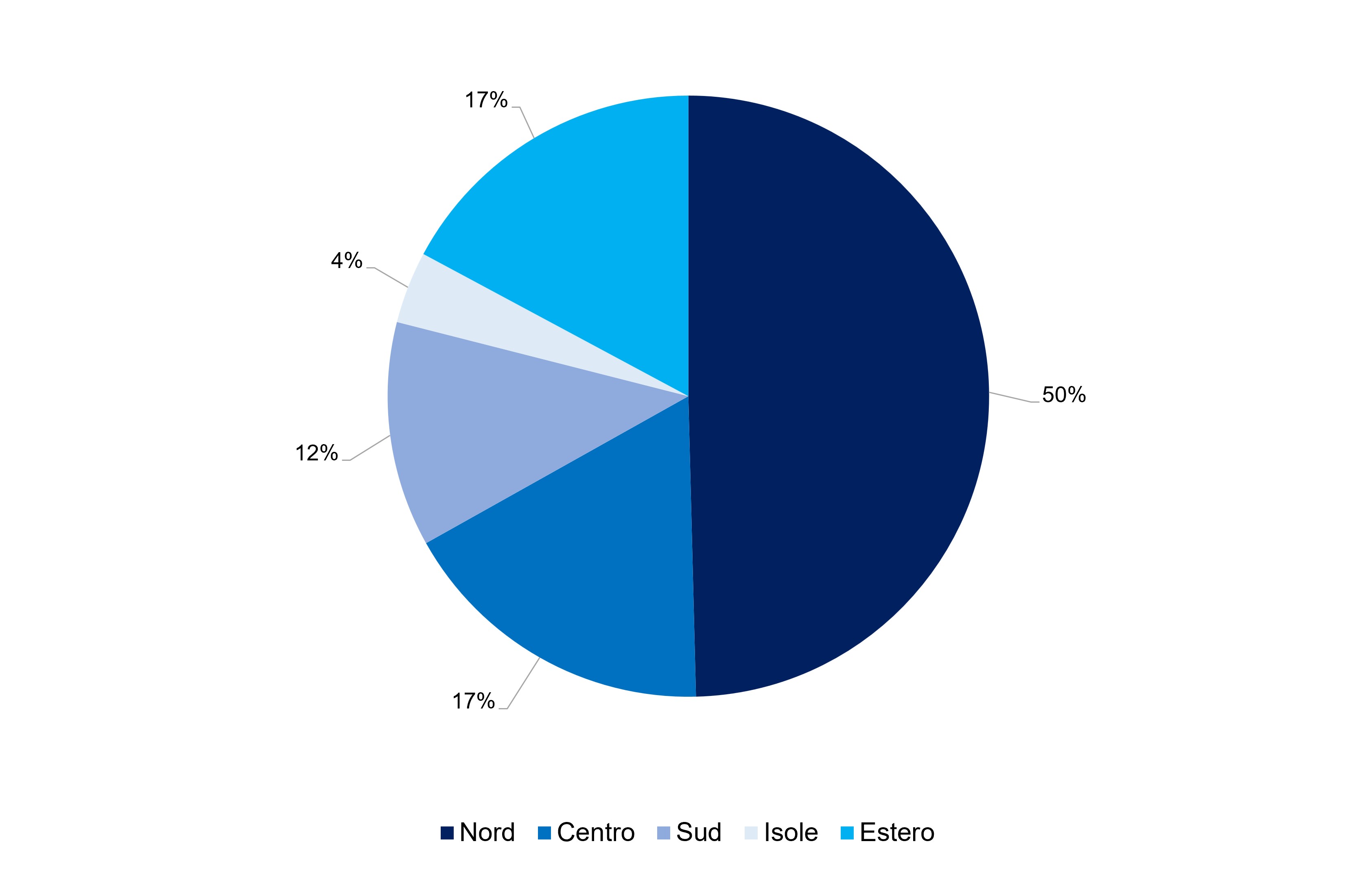
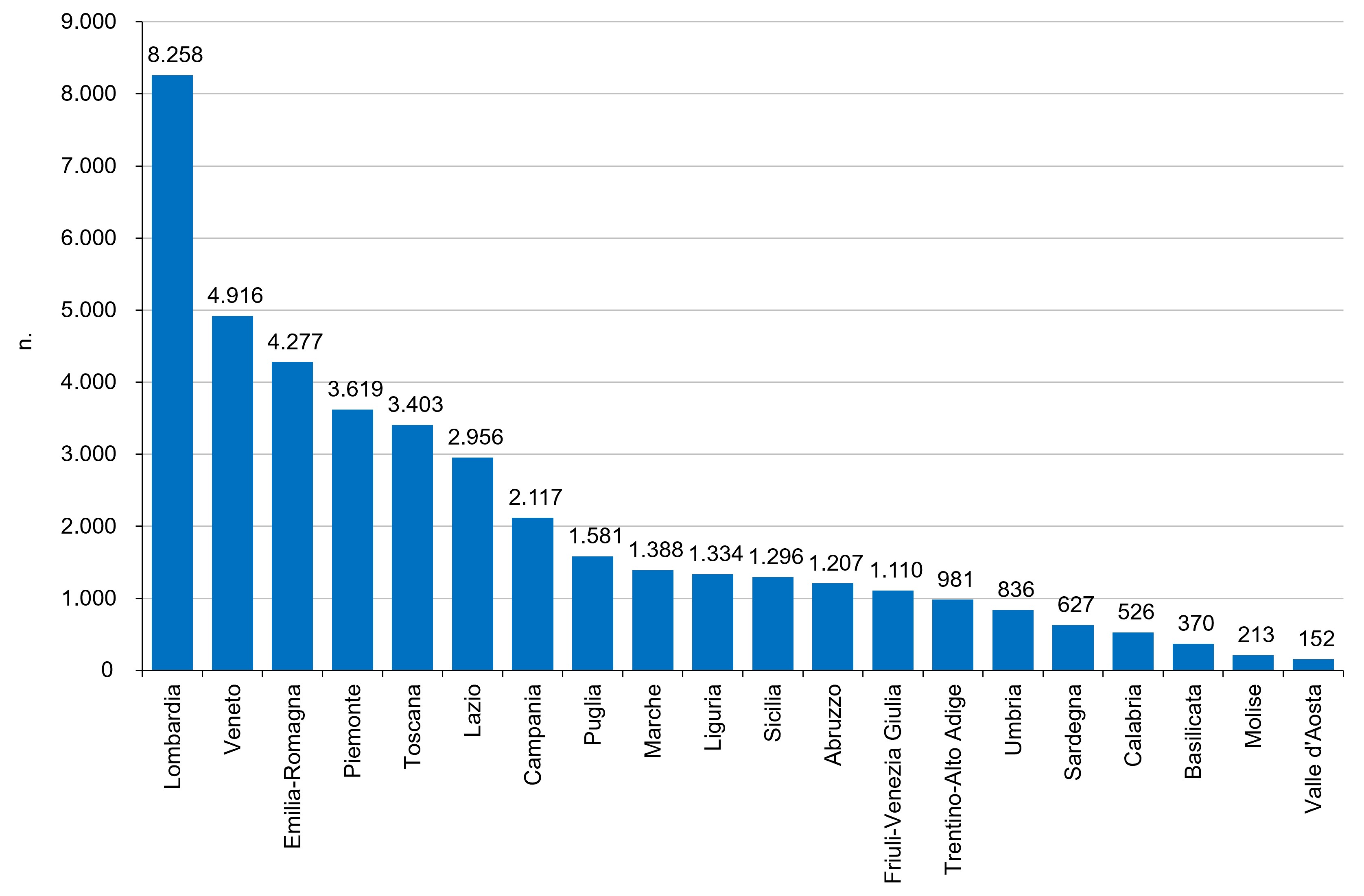
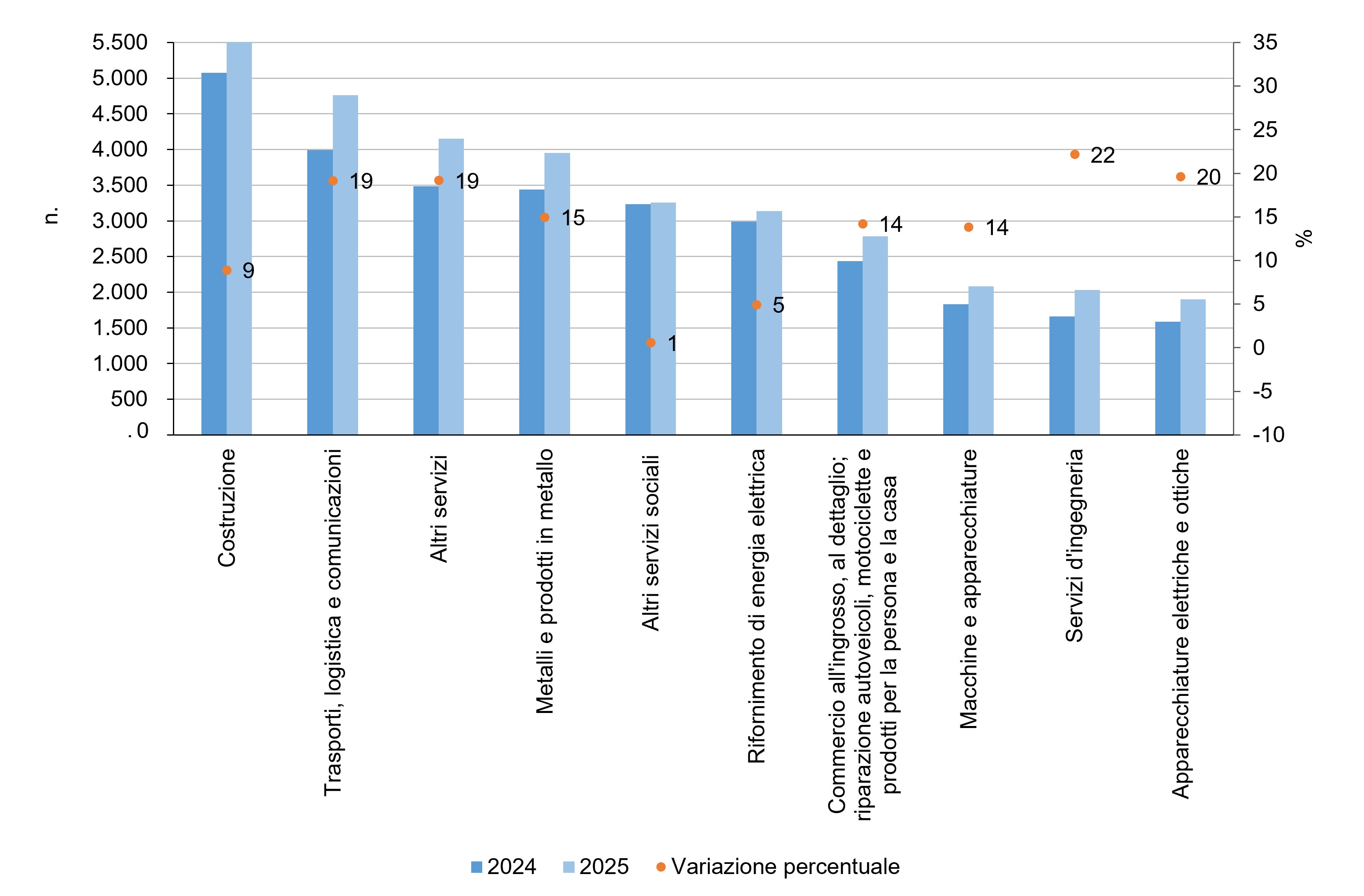
The indicator refers to company sites with an environmental management system compliant with the UNI-EN-ISO 14001 standard, certified by a body accredited by ACCREDIA which certifies its competence and independence according to the international reference standards. There are 41,167 Italian company sites in possession of a certification valid at the end of 2025, a sharp increase compared to 2024 (37,540). 50% of certified companies are concentrated in the Northern regions and Lombardy holds the record for certifications with 8,258 company sites with a management system compliant with UNI-EN-ISO 14001. In addition to Italian company sites, a significant share of foreign companies, equal to 17% of the total, have also certified their environmental management system. The economic sectors in which there is the greatest adherence to certification are "Construction", "Transport, logistics and communications" and "Other services" with 5,528, 4,760 and 4,153 certified company sites.
The number of UNI-EN-ISO 14001 certificates can be considered an indicator of the sensitivity of companies and organizations towards the environment which, through a certified environmental management system, intend to manage and reduce the pressure factors deriving from their activities. A widespread presence of environmental management systems signals a certain receptivity to the topic of sustainable development, to the benefit of the quality of the environment. The number of certificates indicates how many organizations have achieved these objectives and, therefore, meet the requirements of the respective reference standard (UNI-EN-ISO 14001). The certification process passes through the third-party and independent control of an accredited certification body, whose competence, independence and impartiality have been verified by ACCREDIA so as to ensure the impartiality of the evaluations expressed and the reliability of the certifications issued to companies and organizations. The information provided by the indicator is, therefore, to be understood with a view to responding to the problems of pressure and impact generated by pollution linked to production activities. The environmental benefits deriving from the adoption of a UNI-EN-ISO 14001 certification are mainly attributable to: prevention or reduction of environmental impacts; reduction in the use of raw materials and energy in company processes; reduction of emissions or waste; improvement of environmental performance through management and/or technological and plant engineering objectives.
Provide a summary of the level of attention of organizations and businesses to environmental issues, both in the public and private sectors.
- Technical standard UNI-EN-ISO 14001: 2015
- Legislative Decree 31 March 2023, n. 36 CDs. "Public Contracts Code", art. 57
- The Procurement Code has established that Green Public Procurement (GPP) has the nature of a mandatory tool at all administrative levels, thus providing for the inclusion of CAM (Minimum Environmental Criteria, specific for product sectors and adopted with different decrees of the MiTE (now MASE) - within the tender notices.
No pre-established objective as it is a voluntary instrument.
- Accredia - Prometeia (2020). Accreditation and certifications. Economic value and social benefits
- Accredia - Sant'Anna High School (2018). The Circular Economy in public policies. The role of certification
- CESQA, Accredia (2018). Benefits, costs and prospects of the environmental management system: Survey of ISO 14001 certified Italian organizations. 2018 Edition
- Technical standard UNI-EN-ISO 14001: 2015
Symbola - Accredia – Cloros (2016). Certify to compete. From environmental certifications new strength to Made in Italy - Testa, F., Rizzi, F., Daddi, T., Gusmerotti, N. M., Frey, M. And Iraldo, F. (2014). EMAS and ISO 14001: the differences in effectively improving environmental performance. Journal of Cleaner Production, 68, 165-173
The data relating to the number of organizations with an environmental management system certified in accordance with UNI-EN-ISO 14001 are acquired and updated by ACCREDIA and refer only to the certifications issued by certification bodies accredited by ACCREDIA in the EMS scheme - Environmental management systems.
Development of the indicator for the analysis of certification flows, in terms of the relationship between new organizations that are certified pursuant to UNI-EN-ISO 14001 and organizations that are no longer certified.
ACCREDIA
The data of the UNI-EN-ISO 14001 certificates are conferred in real time to ACCREDIA (The Italian Accreditation Body) by all the bodies accredited for the issue of UNI-EN-ISO 14001 certifications and are accessible via a specific platform (https://www. accredia. it/banche-dati/).
National, regional
2004-2025
The number of company sites certified for UNI-EN-ISO 14001 by an organization accredited by ACCREDIA is considered.
In 2025, the number of Italian production sites equipped with an environmental management system certified in compliance with the UNI EN ISO 14001 standard will increase from 37,540 to 41,167 units, recording an increase of approximately 10% compared to the previous year (Table 1 and Figure 1). In particular, the sectors that show the highest percentage growth are: "Engineering services" with 22%, "Electrical and optical equipment" with 20% and, equally, "Transport, logistics and communications" and "Other services" with 19% (Figure 4). The accredited certification of an environmental management system represents a competitive lever for companies, both through improved organizational efficiency and through an improvement of their image. It is no coincidence that the area with the highest number of UNI-EN-ISO 14001 certified production sites is the North with a share of 50% of the total, followed by the regions of the Center (17%), those of the South and the Islands (12% and 4% respectively) and Abroad (17%) (Figure 2).
The number of organizations with an environmental management system certified under accreditation pursuant to the UNI-EN-ISO 14001 standard has steadily increased over the last 10 years (Figure 1).
| Data |
|---|
Headline
Table 1: Evolution in the Number of UNI EN ISO 14001 Certifications by Region Data source
ACCREDIA Note
The certification data refer to company or production sites with an environmental management system certified to UNI EN ISO 14001. A site may correspond to an office, a production facility, or a department of the certified organisation. Multiple certified sites may be associated with a single certified organisation |
Thumbnail
Headline
Figure 1: Evolution in the Number of UNI EN ISO 14001 Certifications Data source
ACCREDIA Note
The certification data refer to company or production sites with an environmental management system certified to UNI EN ISO 14001. A site may correspond to an office, a production facility, or a department of the certified organisation. Multiple certified sites may be associated with a single certified organisation |
Thumbnail
Headline
Figure 2: Percentage Distribution of UNI EN ISO 14001 Certifications by Geographical Area (2025) Data source
ACCREDIA Note
The certification data refer to company or production sites with an environmental management system certified to UNI EN ISO 14001. A site may correspond to an office, a production facility, or a department of the certified organisation. Multiple certified sites may be associated with a single certified organisation |
Thumbnail
Headline
Figure 3: Regional Distribution of UNI EN ISO 14001 Certifications (2025) Data source
ACCREDIA Note
The certification data refer to company or production sites with an environmental management system certified to UNI EN ISO 14001. A site may correspond to an office, a production facility, or a department of the certified organisation. Multiple certified sites may be associated with a single certified organisation |
Thumbnail
Headline
Figure 4: Top Ten Economic Sectors by Number of UNI EN ISO 14001 Certifications (2024–2025) Data source
ACCREDIA Note
The certification data refer to company or production sites with an environmental management system certified to UNI EN ISO 14001. A site may correspond to an office, a production facility, or a department of the certified organisation. Multiple certified sites may be associated with a single certified organisation |
The European Green Deal has traced the path of sustainable growth with which companies and policy makers must deal to achieve the established objectives of climate neutrality by 2050. In this context, public policies find in Green Public Procurement (GPP) an important lever to support the transition towards a new sustainable economic model. In fact, it is also through the demand for sustainable products and services that the Public Administration is able to influence the market. In particular, with the Public Contracts Code (Legislative Decree 31 March 2023, n. 36) the obligation to apply the Minimum Environmental Criteria (CAM) in all public purchasing procedures concerning services/products/works on which the relevant decrees have been issued is confirmed. Accredited conformity assessments, including certifications pursuant to UNI-EN-ISO 14001, frequently referred to within the CAM themselves, are a useful policy tool for making public action efficient and responsive to the set objectives. Awareness of the importance of environmental issues among companies has led to a greater diffusion of certifications and brands that attest to the sustainability of their activities. Consolidated and market-recognized tools such as UNI-EN-ISO 14001 certifications issued by an accredited certification body are an important element of differentiation for those who adopt them. The growing trend in the number of company sites with a certified environmental management system is consistent with this framework, leaving, however, ample room for improvement in the diffusion of UNI-EN-ISO 14001. As of 31 December 2025, there were 41,167 Italian company sites certified by an accredited certification body (Table 1 and Figure 1). The greatest concentration of certified companies is found in the Northern regions (Figure 2), in particular in Lombardy (8,258 certified company sites), Veneto (4,916) and Emilia-Romagna (4,277) (Figure 3). There remains a considerable share (17%) of foreign companies certified by certification bodies accredited by ACCREDIA (Figure 2). Among the 10 sectors with the greatest concentration of certified environmental management systems, "Construction" is still in first position with 5,528 certified sites, followed by the "Transport, logistics and communications" sector with 4,760 and "Other services" with 4,153 (Figure 4).