Stefano Bataloni, Rossella Di Mento, Pasquale Lanera, Giuseppe Trinchera
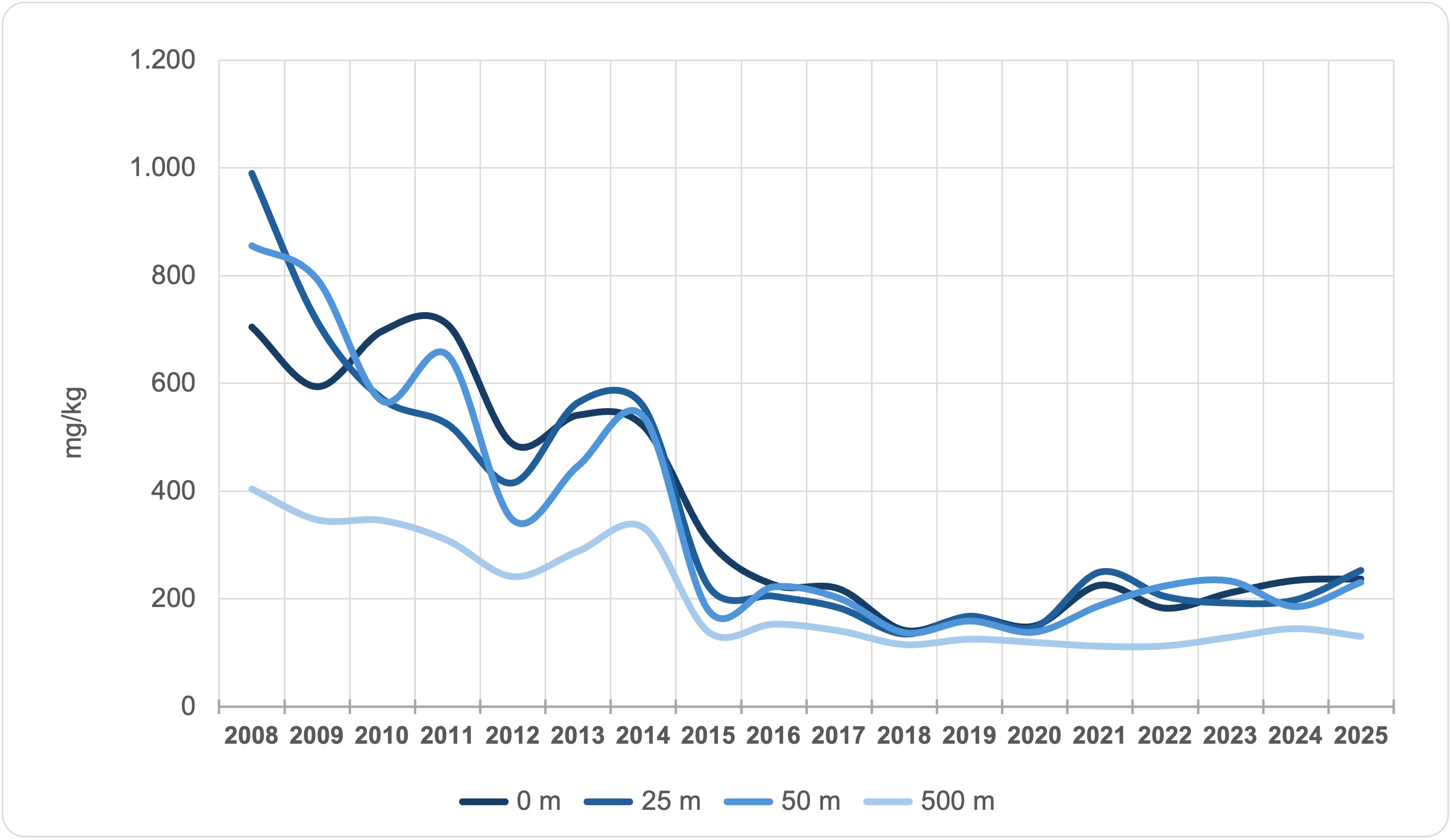
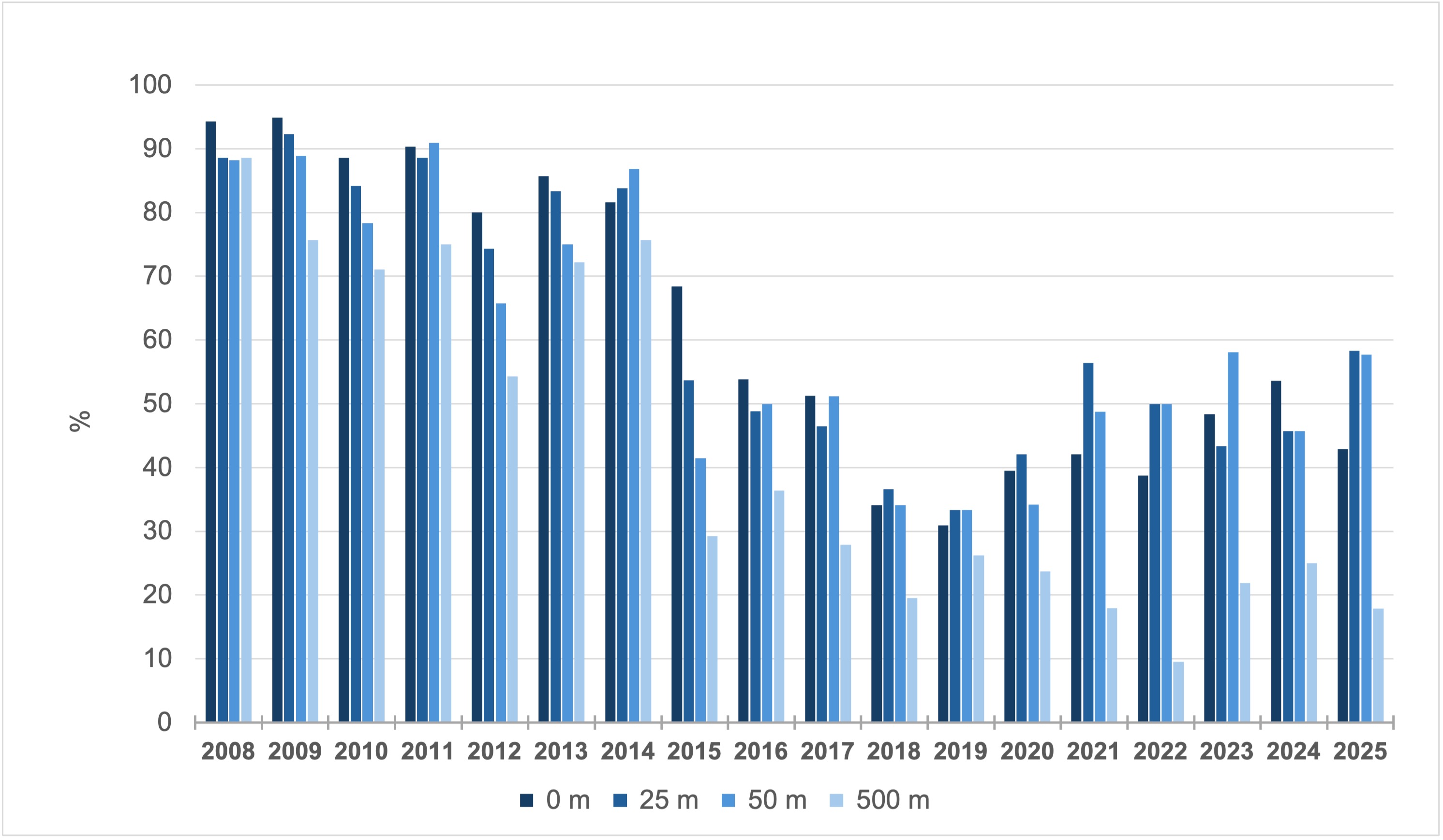
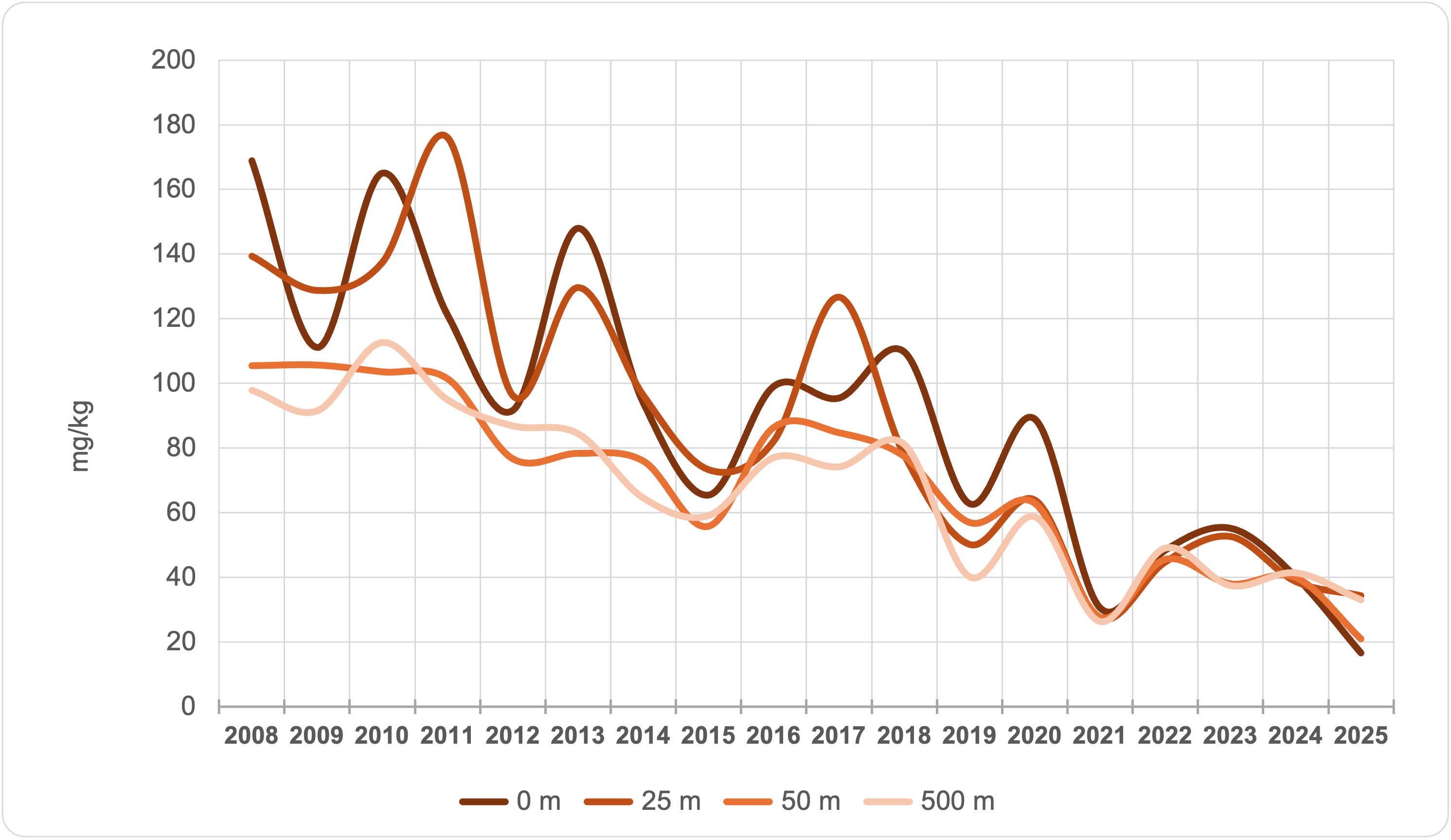
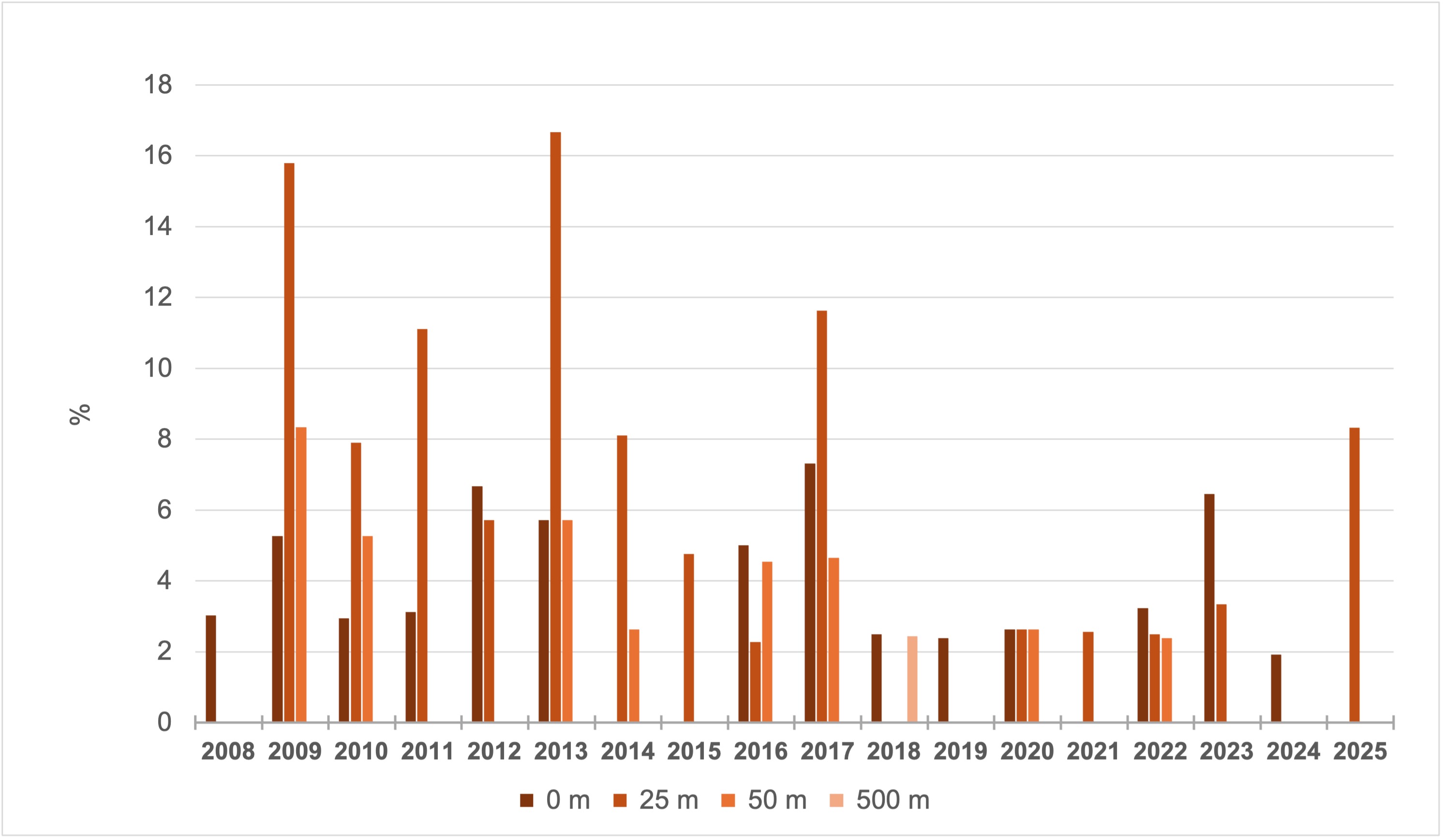
There are 138 offshore platforms in Italy's seas; 42 of them, mostly located in the central and northern Adriatic Sea and intended for natural gas extraction, are subject to an environmental monitoring plan. The chemicals monitored include barium and polycyclic aromatic hydrocarbons (PAHs). Barium is a metal used in drilling fluids and can be present in the production waters periodically discharged into the sea by the platforms; PAHs, on the other hand, are chemicals whose presence in the sea is linked to both natural factors and human activities. Concentrations of barium and total PAHs in the surface sediments surrounding the platforms can be considered environmental indicators of the pressure resulting from the exploitation of offshore gas fields. The data available for the period 2008-2025 show an overall reduction in the average concentrations of both contaminants compared to the earlier years of the series, with generally higher values near the platforms. For barium, in the period 2008-2014, the percentage of samples with concentrations above the baseline reference value is greater than 50% in most year-distance combinations; from 2015 to 2025, exceedances decrease and are generally close to or less than 60%. For total PAHs, in the period 2009-2017, exceedances of the threshold level reach values between approximately 15 and 17% in some years at 25 m stations; in the period 2018-2025, they are generally low, with a value of 8.3% at 25 m in 2025 and zero values at other distances in the same year.
In Italy, some offshore marine gas production platforms are subject to an environmental monitoring plan, generally conducted annually and aimed at investigating a set of physical and chemical parameters in three environmental matrices: water, sediments, and marine organisms (mussels). This plan is mandatory for the Ministry of the Environment and Energy Security (MASE) to issue authorization pursuant to Article 104 of Legislative Decree 152/2006 for the discharge into the sea and/or reinjection into deep geological units of production water from gas extraction activities. Barium sulfate (barite) is a compound widely used in extraction activities to thicken drilling fluids. These fluids are recovered during the extraction process to prevent their release into the environment; However, barium can also be present in production waters discharged into the sea from platforms and can accumulate near installations (Haanes et al., 2023). Barite microparticles, which are very poorly soluble, can disperse over long distances before settling on the seabed and forming complexes with organic matter, making it non-bioavailable and characterized by reduced potential toxicity (Neef, J.M., 2002; OSPAR Agreement 2014-05). The assessment of the distribution of barium levels in surface marine sediments, however, can be used to identify areas affected by discharges from the oil and gas industry.
Polycyclic aromatic hydrocarbons in the marine environment derive from both natural phenomena and anthropogenic activities, such as the combustion of organic substances and fossil fuels; Due to their lipophilicity and low solubility in water, PAHs naturally tend to be adsorbed in suspended particulate matter in the water column and deposited in marine sediments. The enrichment of marine sediments near offshore platforms is likely only minimally related to the discharge of production water, as the PAH content in production water after purification is generally very low. Enrichment is primarily related to the complex activities preparatory to the hydrocarbon production process, which can lead to the release, even accidental, of these substances.
The indicator describes the temporal trend of the concentration of barium and total PAHs in the surface marine sediments surrounding offshore platforms, as a function of the distance from the platform itself. It also describes the temporal trend of the percentage of samples with concentrations above a reference value. In the case of barium, this is a concentration value in the surface marine sediments of the Adriatic Sea, known in the literature and confirmed by in-depth investigations conducted by ISPRA in 2021 in the Italian marine areas where offshore platforms are present. In the case of total PAHs, however, this is a threshold level, known in the literature, beyond which the likelihood of toxic effects on the marine environment arises.
Provide information on total barium and PAH concentrations, indicators of the environmental pressures resulting from offshore gas field development.
Legislative Decree. 152/2006, art. 104 and subsequent amendments.
- Dolenec, T., J. Faganeli & S. Pirc (1998): Major, minor and trace elements in surficial sediments from the open Adriatic Sea: a regional geochemical study. Geol. Croat., 51(1): 59-73.
- Buchman, M.F. (2008): National Oceanic and Atmospheric Administration (NOAA) Screening Quick Reference Tables. NOAA OR&R Report 08-1, Office of Response and Restoration Division, National Oceanic and Atmospheric Administration, Seattle, 34 p.
- Neff, J.M., 2002. In: Chapter 4 - Barium in the Ocean, Bioaccumulation in Marine Organisms. Elsevier, Oxford, pp. 79–87.
- Establishment of a list of Predicted No Effect Concentrations (PNECs) for naturally occurring substances in produced water (OSPAR Agreement 2014-05).
- H. Haanes, Henning K.B. Jensen, Aivo Lepland and Hilde Elise Heldal (2023): Increased barium levels in recent marine sediments from the Norwegian and Barents Seas suggest impact of hydrocarbon drilling and production. Marine Pollution Bulletin (vol. 186, p. 114478)
The indicator does not provide information on all offshore platforms in Italian seas, but only on those authorized to discharge production water into the sea.
MASE
ISPRA
The data is available to MASE and ISPRA
National
2008-2025
Annual mean concentration of barium and total PAHs in surface marine sediments surrounding offshore platforms, as a function of distance from the platform itself.
The concentration data for barium and total PAHs in surface marine sediments are derived from environmental monitoring activities carried out pursuant to art. 104 of Legislative Decree 152/2006 and subsequent amendments. The geometric mean was calculated for all platforms included in the monitoring plan, broken down by calendar year and distance from the platform (0, 25, 50, and 500 m). The choice of the geometric mean, as a synthetic position index, is linked to the log-normal distribution of barium and PAH concentrations. The baseline reference value for barium, equal to 193 mg/kg, was considered the 99th percentile of the concentrations measured in samples from stations located more than 3,000 m from the platforms, calculated following the results of in-depth investigations carried out by ISPRA in 2021 following the agreement with MASE; This data is very similar to the average value of concentration in marine sediments for the central and northern Adriatic reported in Dolenec et al., 1998. For total PAHs, the reference value, equal to 1,684 mg/kg, corresponds to the threshold level beyond which there is a probability of toxic effects on the marine environment (TEL or threshold effect level) reported in Buchman, 2008. The percentage of exceedances of the reference value, both for barium and for total PAHs, is obtained, for each year and each distance from the shelf (0, 25, 50 and 500 m), as the ratio between the number of sediment samples with concentrations higher than the reference and the total number of samples analysed.
The mean (geometric mean) concentration of barium in surface marine sediments located near and at medium distance from offshore platforms in 2025 (Table 1) is between 231 and 253 mg/kg, slightly increasing compared to the previous year at the 0 m station but rising more evidently at the 25 and 50 m stations. At 500 meters from the platform, the average value is 130 mg/kg, a decrease compared to 2024. The percentage of marine sediment samples with a concentration above the baseline reference value (193 mg/kg, Table 2) in 2025 is in the range of 43-58% of the total samples analyzed for the areas between 0 and 50 m from the platform, while in the more distant areas (500 m) the percentage drops to 18%.
The average concentration (geometric mean) of total PAHs in the surface sediments surrounding the platforms (Table 3) in 2025 is between 17 and 34 mg/kg with the highest value at the station located 25 m from the platform. In 2025, no sample placed at the stations at 0, 50 and 500 m exceeds the threshold level of probable toxic effects on the marine environment (1,684 mg/kg, Table 4); Only at the station 25 m from the platform was an exceedance of 8% of the samples recorded.
The average barium concentration values in marine sediments present between 0 and 50 m from the platforms (Figure 1) overall show a decrease in the period 2008-2018; they remain stable until 2020, then rise again in 2021 and then remain mostly stable in the following four years. A similar trend, but with significantly lower values, is observed for sediments located further from the platform. The percentage of exceedances of the baseline reference value for barium remains well above 50% in the period 2008-2014 at all stations around the platforms, particularly those located between 0 and 50 m; In the subsequent period, a decline in the percentage was observed, with a minimum in the two-year period 2018-2019 and a stabilization in the period 2021-2025.
The average concentration of total PAHs shows wide fluctuations in the period considered, particularly for the sediments located between 0 and 50 m from the shelf (Figure 3), but the overall trend is clearly decreasing. The percentage of exceedances of the threshold level also shows wide variations (Figure 4), particularly in the period between 2009 and 2017, during which exceedances were observed in a percentage of samples between 2 and 17% corresponding to the sediments located at 25 m; in all other sampling stations, the percentage remained between 2 and 8%. In the period 2018-2025, with the exception of a peak in exceedances at the station located 0 m from the shelf in 2023 and at 25 m in 2025, for all sediments the percentage of exceedances is zero or in any case less than 0-3%.
| Allegati |
|---|
Titolo
Table 1: Geometric mean of barium concentration as a function of distance from the platform Fonte
ISPRA processing on MASE and ISPRA data |
Titolo
Table 2: Percentage of exceedances of the barium concentration compared to the reference value on the total samples Fonte
ISPRA processing on MASE and ISPRA data Note
Reference value: 193 mg/kg |
Titolo
Table 3: Geometric mean of IPAtot concentration as a function of distance from the platform Fonte
ISPRA processing on MASE and ISPRA data |
Titolo
Tabella 4: Percentuale dei superamenti della concentrazione di IPA totali rispetto al valore di riferimento sul totale dei campioni Fonte
Elaborazione ISPRA su dati MASE e ISPRA Note
Valore di riferimento: 1.684 mg/kg |
Thumbnail
Titolo
Figura 1: Andamento della concentrazione media di bario nei sedimenti marini in funzione della distanza dalla piattaforma Fonte
Elaborazione ISPRA su dati MASE, ISPRA |
Thumbnail
Titolo
Figura 2: Percentuale dei superamenti della concentrazione di bario rispetto al valore di riferimento sul totale dei campioni Fonte
Elaborazione ISPRA su dati MASE, ISPRA |
Thumbnail
Titolo
Figura 3: Andamento della concentrazione media di IPA totali nei sedimenti marini in funzione della distanza dalla piattaforma Fonte
Elaborazione ISPRA su dati MASE, ISPRA |
Thumbnail
Titolo
Figura 4: Percentuale dei superamenti della concentrazione di IPA totali rispetto al valore di riferimento sul totale dei campioni Fonte
Elaborazione ISPRA su dati MASE, ISPRA |
The concentration of barium and total PAHs in marine sediments is a useful environmental indicator of oilfield exploitation activities, although their release into the environment associated with these activities is only partially due to the discharge of production water into the sea. The marine areas most affected by the presence of these contaminants are those located in the immediate vicinity of the platforms; In fact, barium in the areas within 500 m of the platforms has remained at values close to the baseline since 2015 and confirmed also in 2025, while for total PAHs, only in the areas within 25 m of the platform were exceedances of the limit value for probable toxic effects on the marine environment more frequently recorded.
In the period considered, for both chemical substances, both the average concentrations and the percentages of exceedance of the reference value were observed.
Overall, therefore, the data analyzed shows that the state of the environment surrounding the platforms that extract gas from the offshore seabed is in good condition and the trend of environmental pressure resulting from this activity is decreasing, as well as spatially limited to the immediate vicinity of the installations.