Serena Bernabei, Marilena Insolvibile
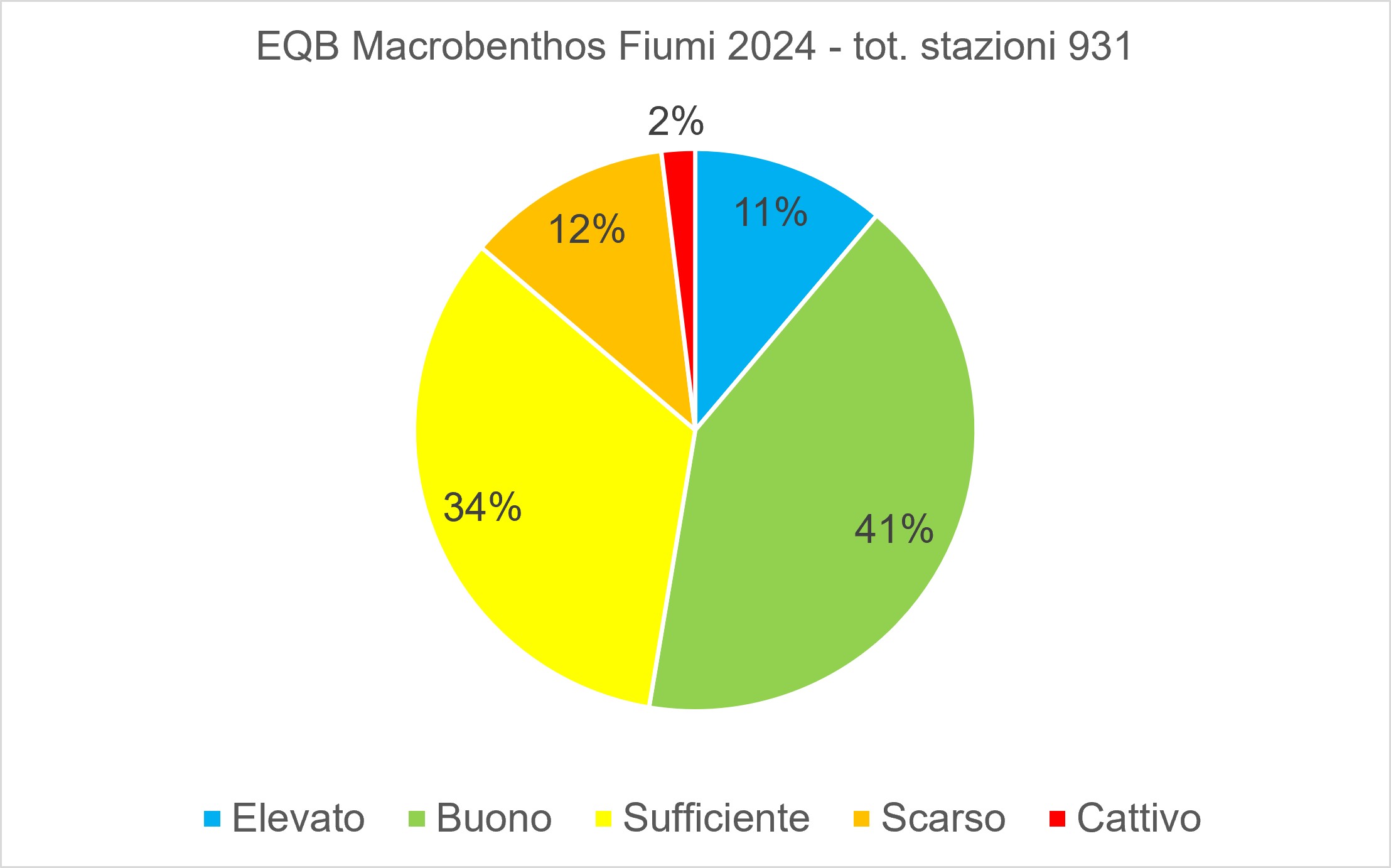
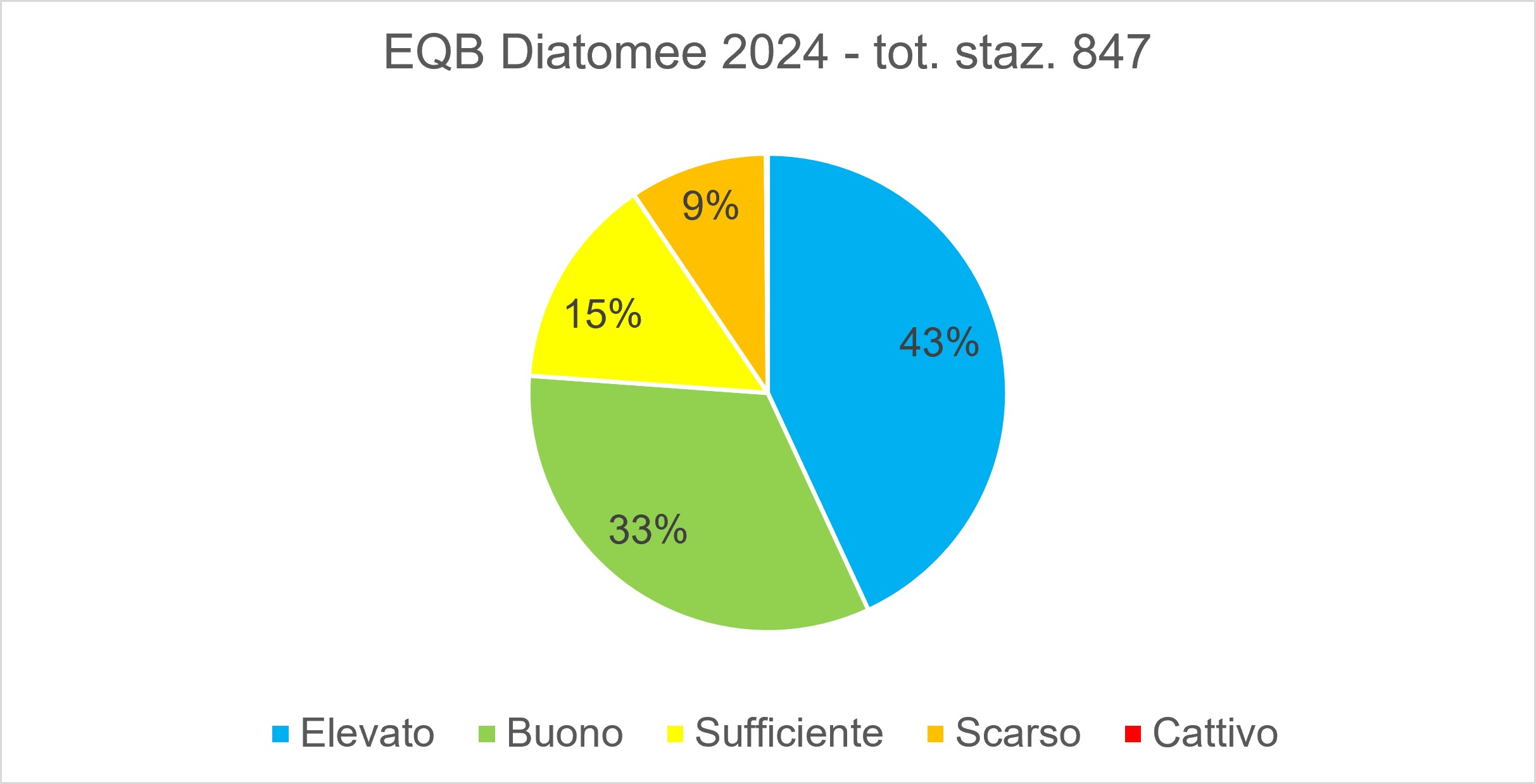
The indicator derives from the application of the reference legislation for the determination of the ecological status of surface water pursuant to Directive 2000/60/EC. For 2024, as part of the WISE2 data stream, data were transmitted for 931 monitoring stations for the EQB Macrobenthos, which in 52.6% of them achieves the "good or higher" ecological status. In the remaining 47.4% there is a state of lower quality than the good. For the EQB Diatomee in 2024, data from 847 monitoring stations were transmitted: in 76.2% of them, a "good or higher" ecological status was found, the remaining 23.8% had a lower ecological status than the good.
The indicator represented derives from the application of the reference legislation for the determination of water quality, which provides for the classification of water bodies through the integration of different indicators, with the validity times of the sex management plans. The same data are also transmitted annually through the WISE-SoE data stream to the European Environment Agency. The monitoring data submitted for WISE-SoE are due in accordance with Regulation (EC) No 401/2009 of the European Parliament and of the Council of 23 April 2009 on the European Environment Agency and the European Environment Information and Observation Network. Annually, therefore, the monitoring data of the sampling stations identified under the annual planning are transmitted by the ARPA/APPA, which can complete the spatial monitoring coverage at the end of the six-year cycle. For the Macrobenthos, the STAR_ICMi multimetric index is used based on a set of indicators (sub-indices) that give information regarding tolerance, abundance/habitats and wealth/diversity of the community. For Diatoms, the ICMi Multimetric Index is applied, which evaluates the abundance of species and their sensitivity to pollutants. The ICMi consists of two indices: the Pollutant Sensitivity Index (IPS) and the Trophic Index (TI). The calculations of the indices for each Organic Quality Element (EQB) must be conducted on a specific-type basis, as required by the legislation. The quality classes for both indices are five and are graphically represented with standard colors: High (blue), Good (green), Sufficient (yellow), Scarce (orange), Bad (red).
It allows to derive the quality class for macrobenthic organisms and diatomic organisms for the definition of ecological status for river water bodies.
Water Framework Directive (2000/60/EC); D. Lgs. 152/06 ss. mm. ii; DM 260/2010.
According to D. Lgs. 152/06 and ss. mm. ii., all river bodies must achieve the environmental quality target corresponding to the "good" state by 2015. Article 77 also defines the conditions for the use of extensions or derogations from this obligation. The environmental status of a surface water body is given by the worst between the chemical state and the ecological state, defined in accordance with Annex 1 to D. Lgs. 152/06 and ss. mm. ii. The classification of ecological status is based on the evaluation of biological quality elements (EQB) and physico-chemical, chemical (specific pollutants) and hydromorphological elements, according to DM 260/2010.
APAT, 2007, Metodi Biologici per le acque. Parte I;
ISPRA - Manuali e Linee Guida 107/2014 - "Linee guida per la valutazione della componente macrobentonica fluviale ai sensi del DM 260/2010”
Macroinvertebrates do not provide adequate answers to all types of stress: they are not sensitive to the effects of herbicides; they do not respond quickly to minor impacts, being adapted to a naturally unstable ecosystem. In addition, community analysis does not allow to distinguish between the various types and degrees of stress and to identify the individual pollutant. Finally, the distribution of some taxa can depend on natural factors, regardless of those closely related to the quality of the site: nature of the substrate, temperature, current speed. Diatoms have microscopic dimensions that do not allow their detection and analysis with the naked eye, unlike other macroscopic algae. Microscopic recognition at the species level may present difficulties. By responding predominantly to changes in the degree of water trophy, diatoms can provide “overestimation” over overall quality.
ARPA/APPA
http://www. sintai. isprambiente. it/faces/public/SOE/index. xhtml (con credenziali)
17 regions and 2 autonomous provinces in reference to the EQB Macrobenthos; 16 regions 2 autonomous provinces in reference to the EQB Diatomee
2024
The final multimetric index for the Macrobenthos STAR_ICMi is obtained from the sum of the normalized metrics, each of which is multiplied by its own weight. This weight varies between the individual metrics while assuming a single value for the three general categories (tolerance, abundance/habitat, wealth/diversity). After the calculation of the weighted average of the metrics, the resulting values are normalized to the median value of STAR_ICMi observed for the reference sites. For each biological component monitored, the result of the RQE (ratio between the value of the index found on the site and the value of the index relative to the reference conditions) is compared with the threshold values reported in the DM Environment 260/2010 corresponding to the 5 ecological status classes provided for each monitored component. The final multimetric index for ICMi Diatoms is based on the identification and count of 400 individuals. The final formula is ICMi=(EQR_IPS + EQR_TI)/2. For diatoms, as well as for each biological component monitored, in fact, the result of the RQE (ratio between the value of the index found on the site and the value of the index relative to the reference conditions) is compared with the threshold values of DM 260/2010 corresponding to the 5 ecological status classes expected for each monitored component.
Compliance with regulatory objectives can only be evaluated with the classification data of water bodies at the end of each sex-sensental monitoring cycle. In 2024, the status of the EQB Macrobenthos of 931 monitoring stations was broadcast. The "good or higher" environmental quality target was achieved in 52% of them (11% in high state and 41% in good condition) (Figure 1). With reference to the Diatome EQB, of the 847 monitoring stations transmitted, 76.2% of them achieve the objective of environmental quality "good or higher" (43.1% in high state and 33.1% in good condition) (Figure 2).
-
| Data |
|---|
Headline
Table 1: Number of monitoring stations transmitted by autonomous region/province and single EQB-Rivers (2024) Data source
ISPRA processing on data transmitted by ARPA/APPA for WISE 2 data stream |
Headline
Table 2: Number of stations transmitted by autonomous region/province and by quality classes - EQB Macrobenthos Rivers (2024) Data source
ISPRA processing on data transmitted by ARPA/APPA for WISE 2 data stream Data legend
Quality Classes: 1 High, 2 Good, 3 Sufficient, 4 Poor, 5 Bad |
Headline
Table 3: Number of stations transmitted by autonomous region/province and by quality classes - EQB Diatomee Rivers (2024) Data source
ISPRA processing on data transmitted by ARPA/APPA for WISE 2 data stream Data legend
Quality Classes: 1 High, 2 Good, 3 Sufficient, 4 Poor, 5 Bad |
Thumbnail
Headline
Figure 1: Percentage distribution by quality classes - EQB Macrobenthos Rivers 2024 Data source
ISPRA processing on data transmitted by ARPA/APPA for WISE 2 data stream Data legend
Quality Classes: 1 High, 2 Good, 3 Sufficient, 4 Poor, 5 Bad |
Thumbnail
Headline
Figure 2: Percentage distribution for quality classes - EQB Diatomee Rivers (2024) Data source
ISPRA processing on data transmitted by ARPA/APPA for WISE2 data stream Data legend
Quality Classes: 1 High, 2 Good, 3 Sufficient, 4 Poor, 5 Bad |
Thumbnail
Headline
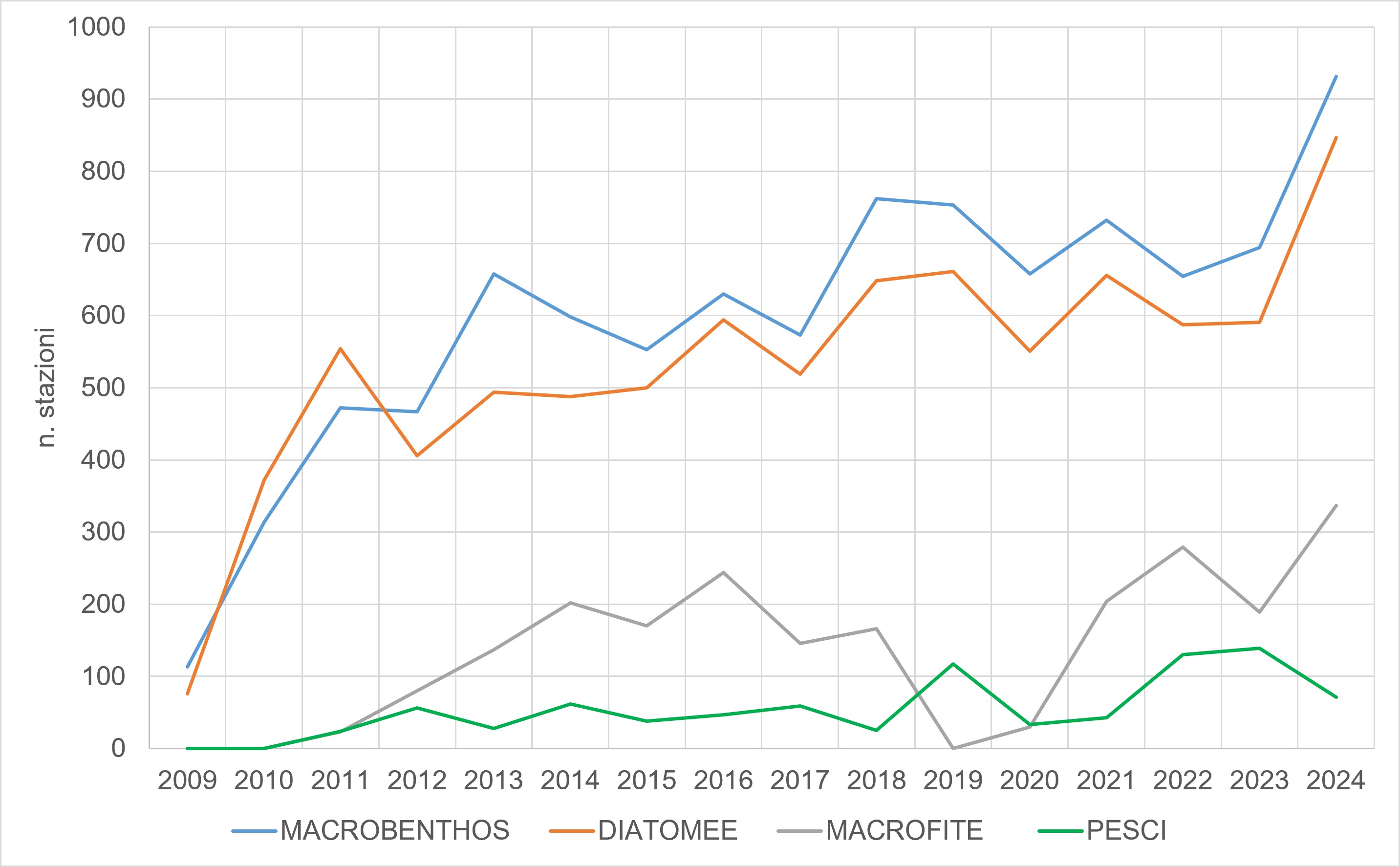
Figure 3: Number of stations transmitted EQB Rivers Data source
ISPRA processing on data transmitted by ARPA/APPA for WISE 2 data stream |
The number and distribution of monitoring points transmitted by the different regions are heterogeneous, as they are dependent on the respective Monitoring Plans, which must be completed over the six-year cycle provided for by the Management Plans. In general, there is a gradual increase in the number of monitoring stations whose data are transmitted annually under the WISE 2 flow (Figure 3); few regions have not transmitted data for several consecutive years, others have sent an extremely limited number of monitoring points. This inhomogeneity undermines the completeness of information at national level, hampering an integrated assessment of environmental status.
ARPAs monitor internal surface water bodies (rivers and lakes) for the determination of ecological status pursuant to Directive 2000/60/EC; monitoring is distinguished in surveillance, operational and investigation according to specific purposes and objectives. With reference to biological quality elements (EQB), the monitoring programs differ in duration, choice of EQBs to be monitored and frequency of measurements; therefore, during the reference six years for the classification of water bodies, within the period of validity of the management plan, the water bodies to be monitored and therefore selected the monitoring stations are identified, with an annual programming. It follows that the comparability of EQB quality status data is ensured at the end of each sex-sensental cycle. The data transmitted by the ARPA/APPA within the WISE 2 data stream, for the rivers, concern the Macrobenthos, Diatoms and Fish EQBs for monitoring carried out in 2024; in particular, 17 regions and 2 autonomous provinces transmitted data relating to the EQB Macrobenthos, 16 regions and 2 autonomous provinces transmitted monitoring data relating to the EQB Diatomee (EQB) With reference to the EQB Macrobenthos (Table 2, Figure 1), it is found that the “good or higher” state represents 52.6% of the monitored water bodies, for a total of 490 monitoring stations respectively. The remainder of the monitored stations have a state of lower quality than the good (47.4%). With reference to the EQB Diatomee (Table 3, Figure 2), it is noted that the “good or higher” state represents 76.2% of monitoring stations, for a total of 645 monitoring stations respectively. The remainder of the monitored stations have a state of lower quality than the good (23.8%). The diversity of results on the attribution of quality classes stems from the different environmental stresses to which the two EQB respond.
Table 1 also contains the other EQBs monitored under the Water Directive, even if not transmitted within the WISE2 data stream. These data have been requested from the 2021 monitoring and although there is an increase compared to previous years, they are not yet representative of the national context.