Maria Teresa Berducci, Paola Guarracino, Chiara Maggi, Giacomo Martuccio, Ginevra Moltedo, Luca Stellati, Francesco Venti
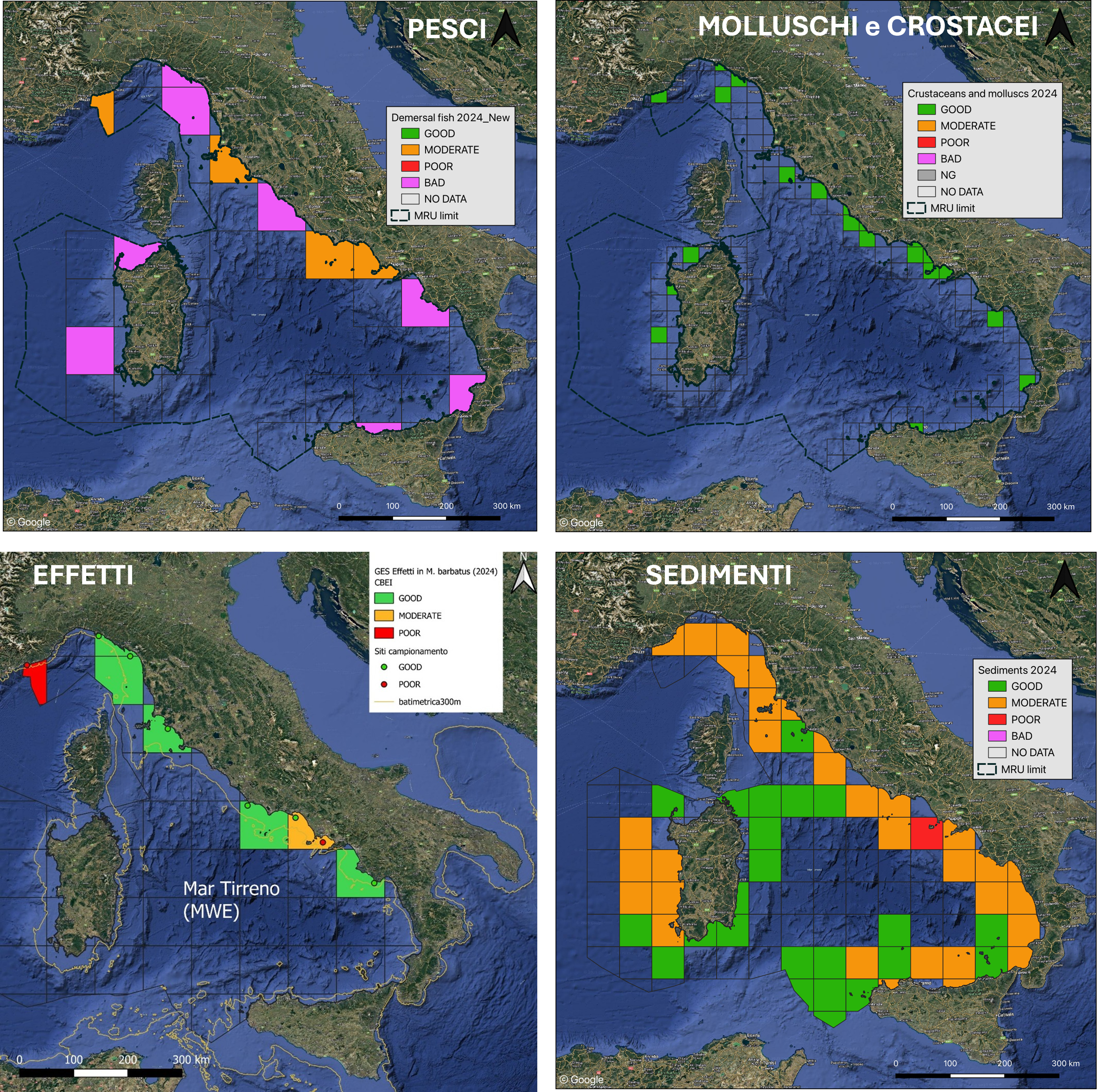
Progress towards achieving the good environmental status of marine waters depends on a series of key factors regulated in Directive 2008/56/EC (MSFD) and implemented in Italy through Legislative Decree 190/2010 (and subsequent amendments). One of the main factors is linked to contamination in waters and organisms and to the progressive elimination of pollution, ensuring that the presence of contaminants does not generate significant impacts or risks for the marine environment. Descriptor 8 of the Marine Strategy Framework Directive 2008/56/EC specifically requires the assessment of the presence of chemical contaminants (D8-C1) and their effects (D8-C2). This is accompanied by Descriptor 9 which provides for the evaluation of the level of contaminants in the edible tissues of fishery products compared to the limits established by Regulation (EU) 2023/915. In 2024, monitoring of the Marine Reporting Unit (MRU) West Mediterranean Sea (MWE). The data collected comes from the specific monitoring carried out by ISPRA and from the institutional monitoring of the experimental zooprophylactic institutes. The definitive evaluation, in relation to the judgement Good Environmental Status (GES), will be processed as soon as all the data produced by the regional agencies are available. With the data available to date, bioaccumulation has a problem linked to exceeding the regulated value of mercury, however from a health point of view a positive opinion is confirmed. This result is in line with what has already been highlighted in past years. For the sediment matrix there is a criticality linked to the presence of TBT and some metals.
The indicator measures the concentration of contaminants in the biota and sediment matrices and the effects of these (MSFD Descriptor 8), taking into account the selected biological processes and the taxonomic groups in which a cause/effect relationship that must be monitored has been identified. Furthermore, this indicator also includes the assessments of Descriptor 9 which measures the presence of contaminants in fish products intended for human consumption.
The evaluation applies to the three Sub-Regions, also called Marine Reporting Unit (MRU): Adriatic Sea (MAD), Ionian Sea and Central Mediterranean (MIC), Western Mediterranean (MWE). Each MRU extends up to the Exclusive Economic Zone (EEZ). To proceed with the evaluation of the good environmental status, a grid with cells of variable dimensions was applied to each MRU depending on the MRU and the matrix (biota and sediment) and, in particular for the biota matrix, also in relation to the functional group of the species investigated".
The chemical parameters monitored are the substances or groups of substances present in the priority list (Regulation 2455/2001 and further regulated in Directive 2013/39/EC). As regards the biochemical parameters for the evaluation of the effects, the choice of the species and the biomarker analyzes to be performed on the different organs and/or tissues was defined consistently with what is indicated in the Recommendations of the United Nations Environmental Program (UNEP) (UNEP/MAP, 2017 Mediterranean QSR; UNEP/MAP, 2019 WG467/05; UNEP/MAP, 2021 WG509/43 Annex III App 22-23-24) and according to the indications of the European working groups of the International Council for the Exploration of the Sea (ICES) and del Program for the Assessment and Control of Marine Pollution in the Mediterranean (MedPol), which operate in response to international conventions such as the Convention for the Protection of the Marine Environment of the North-East Atlantic (OSPAR), Helsinki Commission (HELCOM) e Barcelona Convention for the Protection of the Marine Environment and the Coastal Region of the Mediterranean (UNEP).
For sediments, the categories of contaminants are: metals, polycyclic aromatic hydrocarbons (PAHs), halogenated organic compounds (HOCs) also including dioxins, furans and dioxin-like PCBs (PCDD, PCDF, PCB-DL) and organotin compounds (TBT).
For biota, the categories of substances investigated are: metals, polycyclic aromatic hydrocarbons (PAHs), halogenated organic compounds (HOCs) also including dioxins, furans and dioxin-like PCBs, polybromodiphenyl ethers (PBDEs), perfluorooctanesulfonic acid (PFOS), determined in fish samples, while the categories dioxins, furans and dioxin-like PCBs (PCDD, PCDF, PCB-DL) and polycyclic aromatic hydrocarbons (PAHs) determined only in molluscs and crustaceans, as defined by environmental legislation.
For the evaluation of the effects, measured on the bioindicator species Mullus barbatus , the biological responses (biomarkers) analyzed are: 1) the destabilization of lysosomal membranes by exosaminidase (LMS-ESO) indicative of alteration of the physiological state, 2) the increase in the frequency of micronuclei (MN) indicative of genotoxicity, 3) the inhibition of the activity of acetylcholinesterase (AChE) indicative of neurotoxicity, 4) the increase in activity of ethoxyresorufin-o-deethylase (EROD) indicating alteration of the CYP450 biotransformation system.
To carry out the assessment of GES within the MRU, Italy used the integrated index of chemical quality (called Chemical Quality Index, CQI), already previously developed and used for the assessments of the Marine Strategy and the weighted index of biological effects (called Calibrated Biological Effects Index, CBEI), recently developed by ISPRA.
In order to indirectly evaluate the impact on human health, the parameters established by EU Regulation 2023/915 were considered, verifying whether or not the regulatory limit was exceeded ( Threshold Level , TL) by the concentrations found in the biota samples. Also in this case, as for the evaluation of the good environmental status for descriptor 8, a grid with cells of variable dimensions depending on the organisms analyzed was applied to the MRU.
Assess the quality status of the marine environment taking into account both any exceeding of the environmental quality standards (EQS) identified by Directive 2000/60/EC and its daughter directives (Directive 2008/105/EC and Directive 2013/39/EU) and the biological effects produced on organisms (biomarkers). Furthermore, indirectly, evaluate the impact of environmental contamination on human health.
The Marine Strategy Directive 2008/56/EC required Member States to achieve good environmental status (GES, Good Environmental Status ) for its marine waters. From 2020, every 6 years each Member State defines a monitoring plan to assess the good environmental status of its seas. The determination of good environmental status is based on a list of eleven qualitative descriptors of the marine environment which refer to multiple aspects of marine ecosystems, including Descriptor 8, which specifically requires the evaluation of the presence of chemical contaminants and their effects. The judgment on the quality of the marine environment based on this Descriptor takes into account both the concentrations of contaminants, indexed and integrated up to the matrix level (sediment and biota), and the effects produced on organisms in terms of bioaccumulation and biological effects (biomarkers), compared to the respective controls and thresholds. Furthermore, this indicator also takes into account Descriptor 9, relating to the quantification of contaminants in fish.
Legislative Decree 190/2010
Decision (EU) 2017/848 of the European Commission
Directive 2000/60/EC (WFD).
Directive 2009/90/EC
Directive 2013/39/UE. D. Lgs. 219/2010.
Legislative Decree 172/2015
Regulation (EU) 2023/915
Maggi C., Berducci M. T., Lomiri S., Di Lorenzo B., Venti F., (2022) “Integrated chemical status of the Italian marine waters sensu Descriptor 8 of the Marine Strategy Framework Directive" Frontiers in Marine Science, section Marine Pollution, https://doi. org/10.3389/fmars.2022.1006595
Moltedo G., Martuccio G., Catalano B., Stellati L., Sebbio C., Guarracino P., Berducci M. T., Tornambè A., Maggi C., 2025. Process towards the definition of the assessment criteria for the biological effects of contaminants on fish in the Italian sea-waters national monitoring. Journal of Environmental Comments and Observations (JECO), 01(1): 69-88. https://doi. org/10.82010/jeco. bsrc.2025.03.
Viarengo A., Dondero F., Pampanin D. M., Fabbri R., Poggi E., Malizia M., Bolognesi C., Perrone E., Gollo E., Cossa G. P., 2007. A Biomonitoring Study Assessing the Residual Biological Effects of Pollution Caused by the HAVEN Wreck on Marine Organisms in the Ligurian Sea (Italy). Arch Environ Contam Toxicol 53:607–616.
Zorita I., Ortiz-Zarragoitia M., Apraiz I., Cancio I., Orbea A., Soto M., Marigómez I., Cajaraville M. P., 2008. Assessment of biological effects of environmental pollution along the NW Mediterranean Sea using red mullets as sentinel organisms. Environmental Pollution 153: 157-168.
Insufficient spatial coverage of bioaccumulation data (especially in molluscs and crustaceans) and biomarker data to be able to make a judgment regarding whether GES has been achieved; difficulty in finding in good time the monitoring data carried out by regional coastal agencies which are needed for a complete assessment of the quality status of the marine environment of the sub-region under examination.
Corrective actions regarding greater spatial coverage of bioaccumulation and biomarker data. For contaminants, spatial coverage will be implemented and recalculated once ARPA data is included.
Judgment to be completed with the elaboration of the relationship between environmental contamination and biological effects on the organisms present there.
ISPRA
Experimental Zooprophylactic Institutes (II. ZZ. SS.)
Monitoring of the Marine Strategy Framework Directive 2008/56/EC (MSFD) - Centralized Information System (SIC): https://strategiamarina. isprambiente. it/sic-sistema-informativo-centralizzato/
Western Mediterranean Sea (MWE)
2024
The indicator was developed according to the indications contained in Decision 2017/848 for Descriptor 8 of the Marine Strategy.
A conformity check with the requirements of Directive 90/2009/EC was carried out on all the 2024 data, collected by ISPRA monitoring and IZS monitoring, and the data found to be compliant were processed and indexed.
In order to evaluate the environmental state starting from the concentration of contaminants, an index was developed, based on the comparison with the reference values reported in national/international legislation (Directive 2008/105/EC, Directive 2013/39/EU, Legislative Decree 219/2010, Legislative Decree 172/2015). This index is built on the differences between the individual concentration values and the respective environmental quality standards (EQS), weighted by an appropriate hazard/priority coefficient, which allows a different weight to be given to priority and dangerous substances, only dangerous ones, or neither priority nor dangerous ones. This is an index centered at zero, a value assumed if the concentration of the contaminant is equal to that of the EQS. Values above zero, therefore, indicate that the legal limit has been exceeded, which can then be amplified or not by the danger coefficient.
The Chemical Quality Index (CQI) provides successive levels of integration.
The single index thus constructed is the basis for the creation of a category index, which allows each category of contaminants to be evaluated as a whole. This category index, given by the maximum value of the individual indices determined for each contaminant, is still a dimensionless index and is applicable to each of the matrices considered (sediment and biota).
Based on how much the category index deviates from zero, chemical quality classes have been established ranging from GOOD (deviations absent or within tolerance ranges) to BAD (deviation of even a single parameter of at least one order of magnitude compared to the EQS value), with MODERATE and POOR as intermediate classes. The next level of integration is the matrix level: for each monitoring point the indices of all categories are integrated to obtain an integrated judgment of chemical quality for the matrix at that point (Maggi et al., 2022).
Regarding the evaluation of the effects of contaminants on biota, in line with the decisions taken within ICES and UNEP, thresholds have been established for M. Barbatus ( Italian Background Assessment Criteria IT-BAC e Threshold of Biological Relevance TBR) valid at national level, on the basis of which an evaluation criterion for the results obtained was defined, using a weighted index (Moltedo et al., 2025). These national thresholds are preliminary and will be subject to constant updates, based on the results of the monitoring that will be carried out in subsequent years.
The weighted CBEI index, developed by ISPRA, made it possible to express an "integrated judgment" on the biological effects of contaminants. The index is based on the comparison between the biomarker values measured at each monitored point and the defined threshold values, taking into consideration the size and the different "biological relevance" of this deviation, in addition to the different "weight" that each biological response has. This index, calculated by integrating the results of all the biomarkers measured in each site, can have a minimum value equal to "zero" (in the case in which the average values of all the biomarkers analyzed are equal to or lower than the threshold values) and a maximum value equal to "14" (in the case in which the average values of all 4 biomarkers analyzed are much higher than the threshold values). Subsequently, based on the comparison of the CBEI value with the "judgement thresholds", each site is assigned a rating from "GOOD" to "BAD".
In order to spatially represent the indices and judgments associated with all monitoring points, each MRU was divided into GRIDs with cells of specific dimensions for each matrix. All the indices of the points that fall into the same cell are processed in order to obtain a cell with an integrated judgment at the matrix level.
A judgment can only be made in the presence of sufficient spatial coverage of the MRU, equal to at least 50% of the total cells. In addition, the GES condition is reached when at least 60% of the surface covered by data is classified as GOOD and the NO GOOD component (POOR + BAD judgments) does not exceed 25%.
For the biota matrix (bioaccumulation) it was decided to use target species similar to those chosen in previous years as they are uniform among the MRU (mullet, cod and crustacean or mussel) in order to obtain comparable data.
For the evaluation of the effects (biomarker) we chose to use the target species M. Barbatus (mud mullet) similar to that used in previous years, in order to obtain comparable data between different years. This target species, being benthic, allows us to evaluate the effects generated by the contaminants present in the sediments.
To evaluate the impacts on human health, the maximum levels reported in EU Regulation 2023/915 were considered, through which it was assessed whether the contaminants present in fish products are compatible with human consumption. Also in this case, the GES evaluation for the subregion is expressed only if the data allow MRU coverage of at least 50% of the total cells. Furthermore, it is considered that, if the percentage of individuals with values below the regulatory limits is greater than 70%, then it is possible to state that the MRU is in GES.
In the case of biota, although the data coverage does not allow us to make a judgment on the quality status of the Western Mediterranean Sea (MWE) subregion, it is clear that the percentage of cells in poor status is high for the Demersal Fish (Table 1), essentially due to the contribution of mercury, which very often exceeds the EQS set by Legislative Decree 172/2015. In any case, the values found, when compared with the limits established by Regulation (EU) 2023/915 for edibility, are compliant in almost all cases (Table 3).
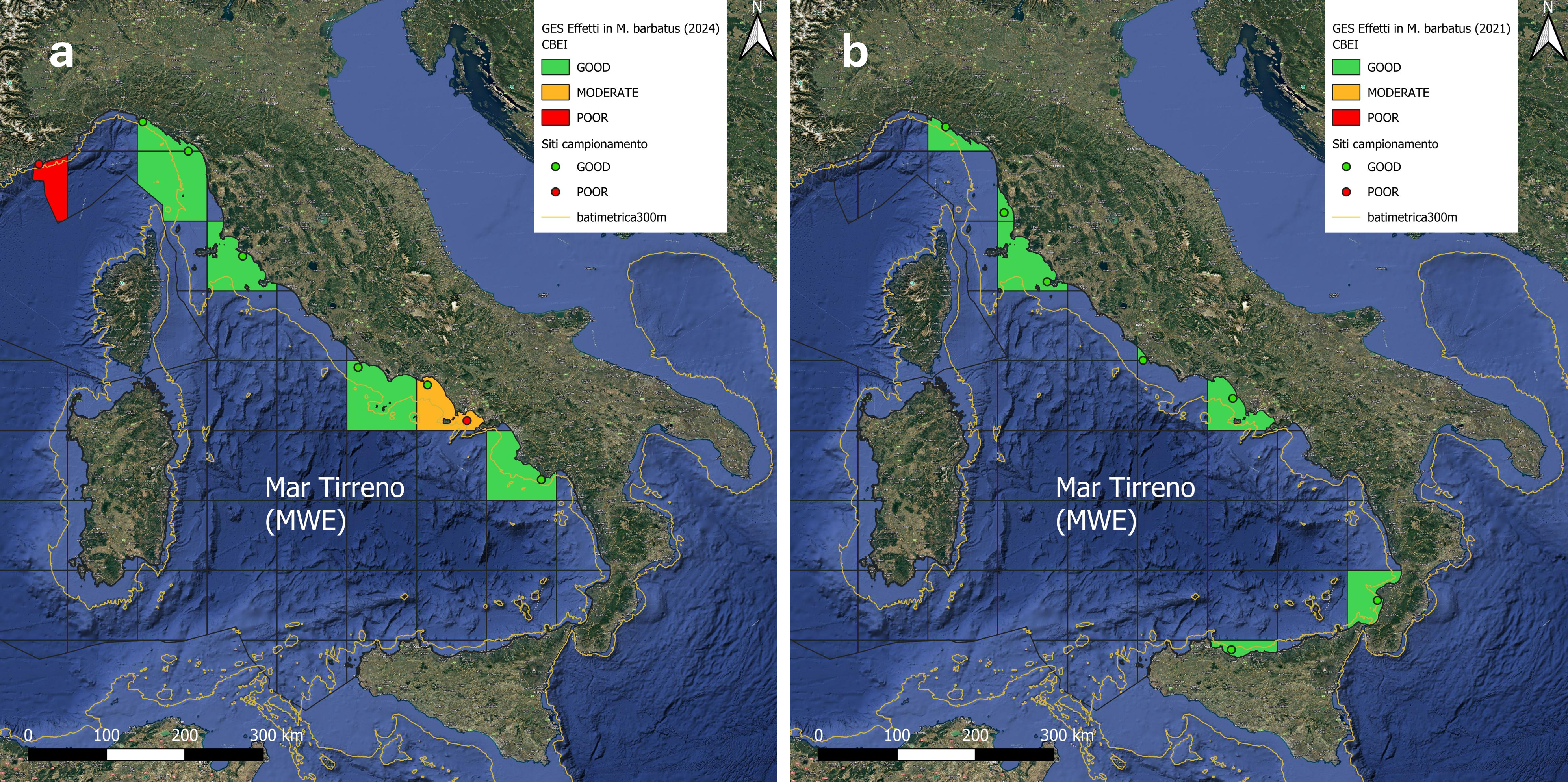
The evaluation of the effects also presents comforting results. Although in fact, even for this parameter the data coverage does not allow us to give a judgment on the state of quality, as regards the integrated index of the effects of contaminants on M. Barbatus , the percentage of cells in good state (“good”) in the MWE MRU is equal to 71% of the sampled cells (Table 4).
For the sediment matrix, the highest percentage of cells is in the "moderate" class with a value of 67%, while the percentage of cells in "good" is around 40% (Table 5).
Compared to the data collected in 2021, the bioaccumulation trend is stable.
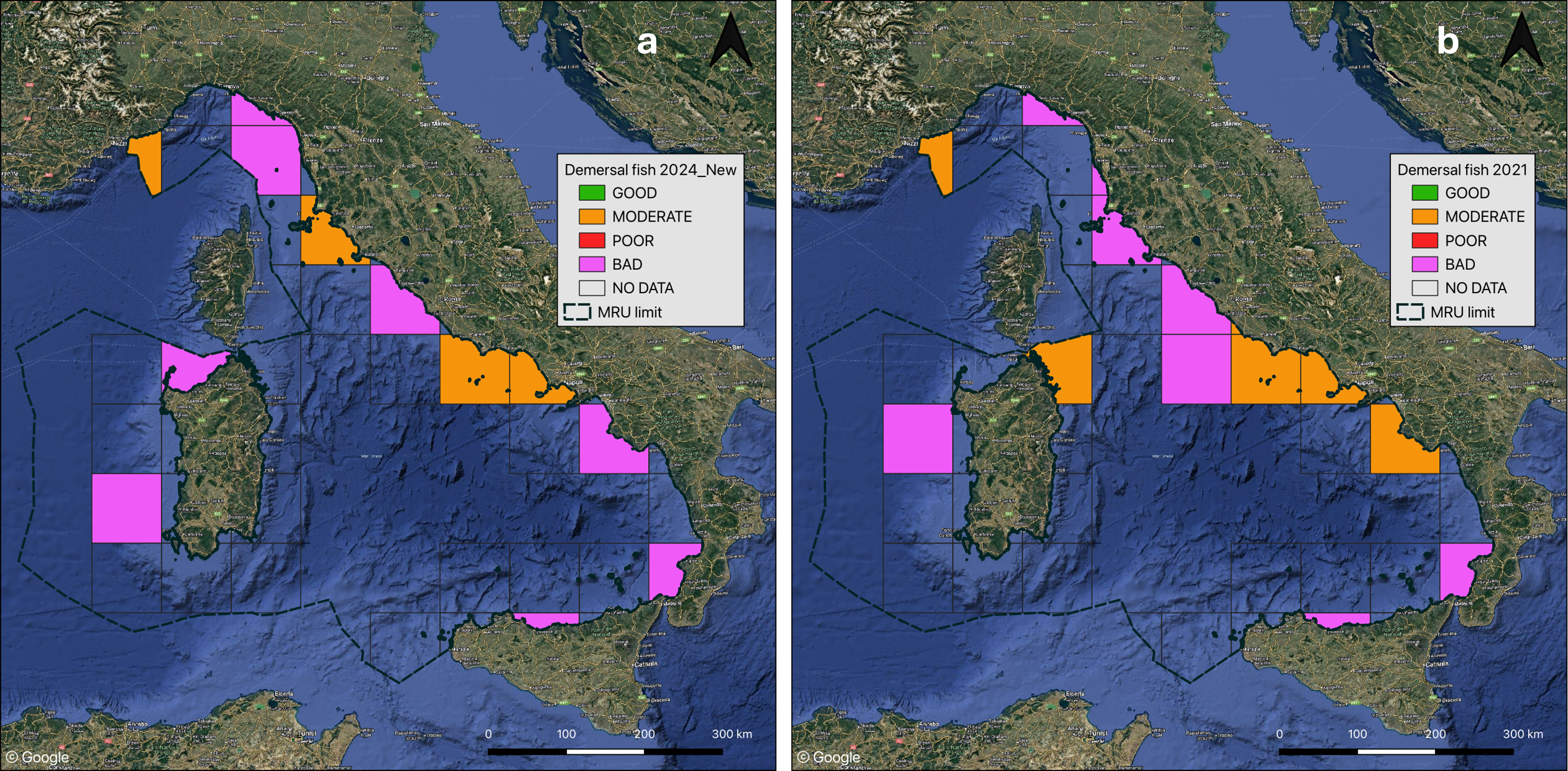
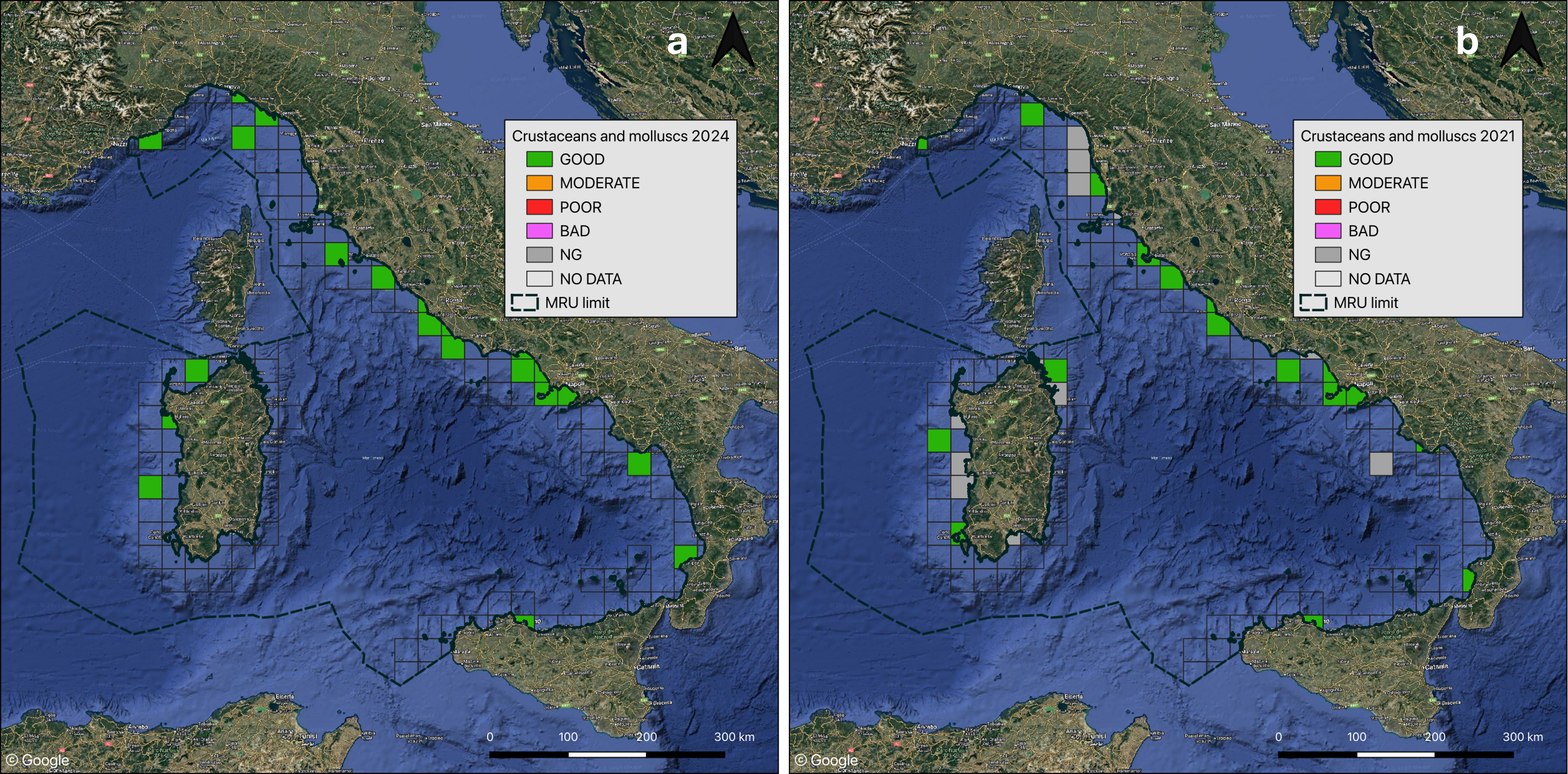
For molluscs and crustaceans, in which PAHs, Dioxins and PCBs are determined, similarly to 2021 the status is good in all cells investigated (Figure 2); for fish, the majority of monitored cells are in a poor state, due to the bioaccumulation of mercury, following what emerged from the 2021 data (Figure 1).
From the point of view of health limits (EU Regulation 915/2023) and, therefore, for Descriptor 9 of the Marine Strategy, the trend is stable compared to 2021 for all parameters. Although even in this case the data does not guarantee coverage of most of the subregion, the cells are in good condition. In both 2024 and 2021, very few exceedances were recorded for PAHs and mercury (percentage of compliant samples above 95% in 2024).
Similarly, with regards to the evaluation of the effects in the Tyrrhenian Sea (MWE), although the indicator is still in the testing phase and although the coverage necessary to be able to express a judgment has not been achieved, between 2021 and 2024 we observe the continuation of a good state, given by a percentage of cells sampled in GOOD > 60% and of cells in NO GOOD < 25% in both years considered (Figure 6).
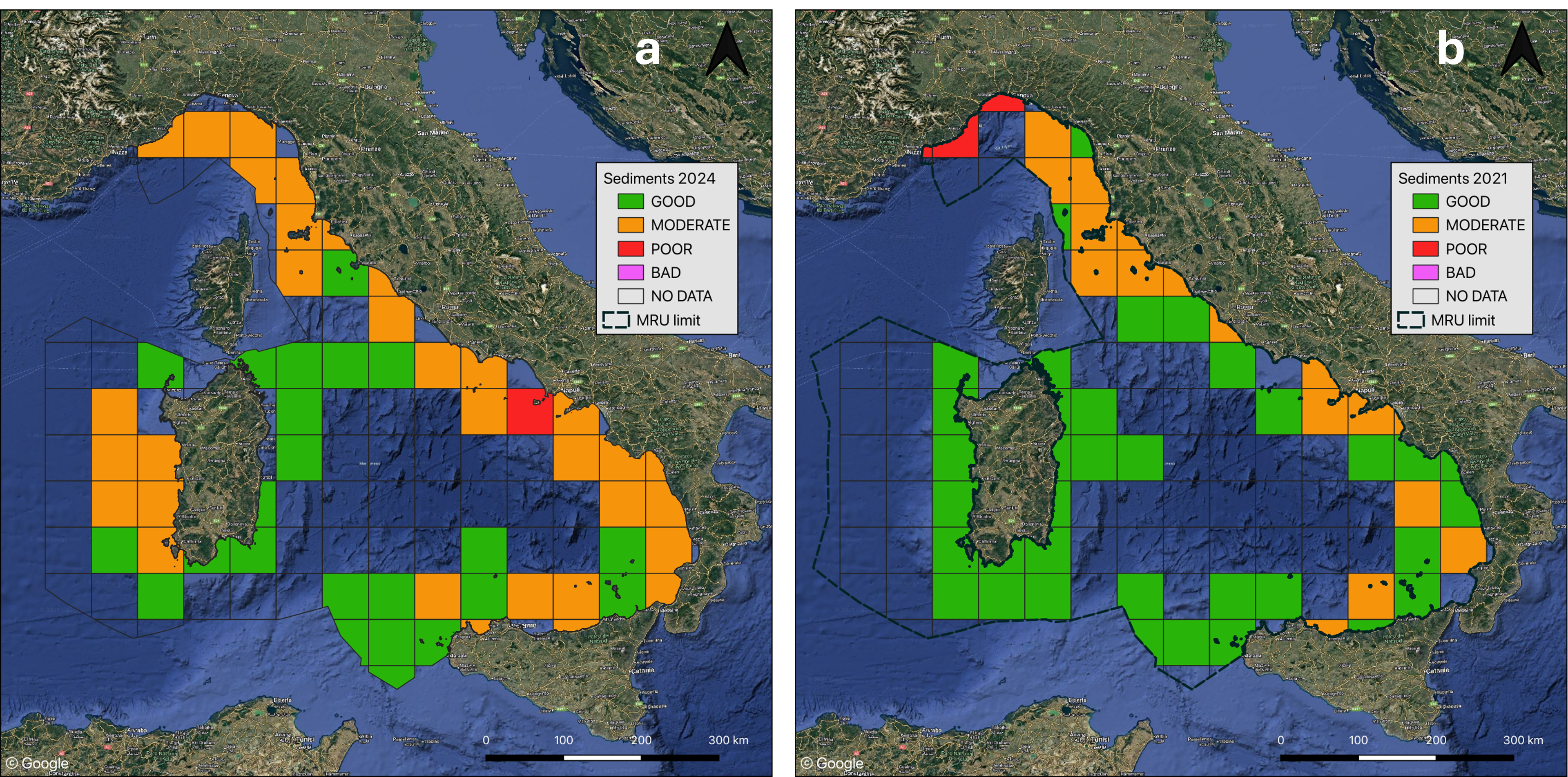
For sediments, the data collected in 2024 show the same spatial distribution as 2021, reaching the same coverage, equal to 50%. The partial judgment in the MWE subregion, as it is awaiting data from the regional agencies, shows a situation that is not in a good state, with a worsening compared to what was recorded in 2021 (Figure 7). The recorded exceedances are linked to some metals and TBTs.
| Allegati |
|---|
Titolo
Table 1: Spatial coverage and bioaccumulation assessment in groundfish, 2024 data (MSFD D8C1) Fonte
ISPRA |
Titolo
Table 2: Spatial coverage and bioaccumulation assessment in molluscs and crustaceans, 2024 data (MSFD D8C1) Fonte
ISPRA |
Titolo
Table 3: Spatial coverage and evaluation according to the health limits of Reg. (EU) 2023/915, 2024 data (MSFD D9) Fonte
ISPRA |
Titolo
Table 4: Coverage statistics and impact assessment in the MWE subregion (MSFD 2024 D8C2) Fonte
ISPRA Note
*Sampleable cells (species biology): areas <300 m deep. |
Titolo
Table 5: Spatial coverage and evaluation for the sediment matrix, 2024 data (MSFD D8C1) Fonte
ISPRA |
Thumbnail
Titolo
Figure 1: Assessment of bioaccumulation in demersal fish based on 2024 (a) and 2021 (b) data (MSFD D8C1) Fonte
ISPRA |
Thumbnail
Titolo
Figure 2: Assessment of bioaccumulation in molluscs and crustaceans based on 2024 (a) and 2021 (b) data (MSFD D8C1) Fonte
ISPRA |
Thumbnail
Titolo
Figure 3: Evaluation of mercury bioaccumulation from 2024 data (MSFD D9), according to the limits of Reg. (EU) 2023/915, in fish muscle, crustaceans and molluscs (a) and in Mullus barbatus muscle (b) Fonte
ISPRA |
Thumbnail
Titolo
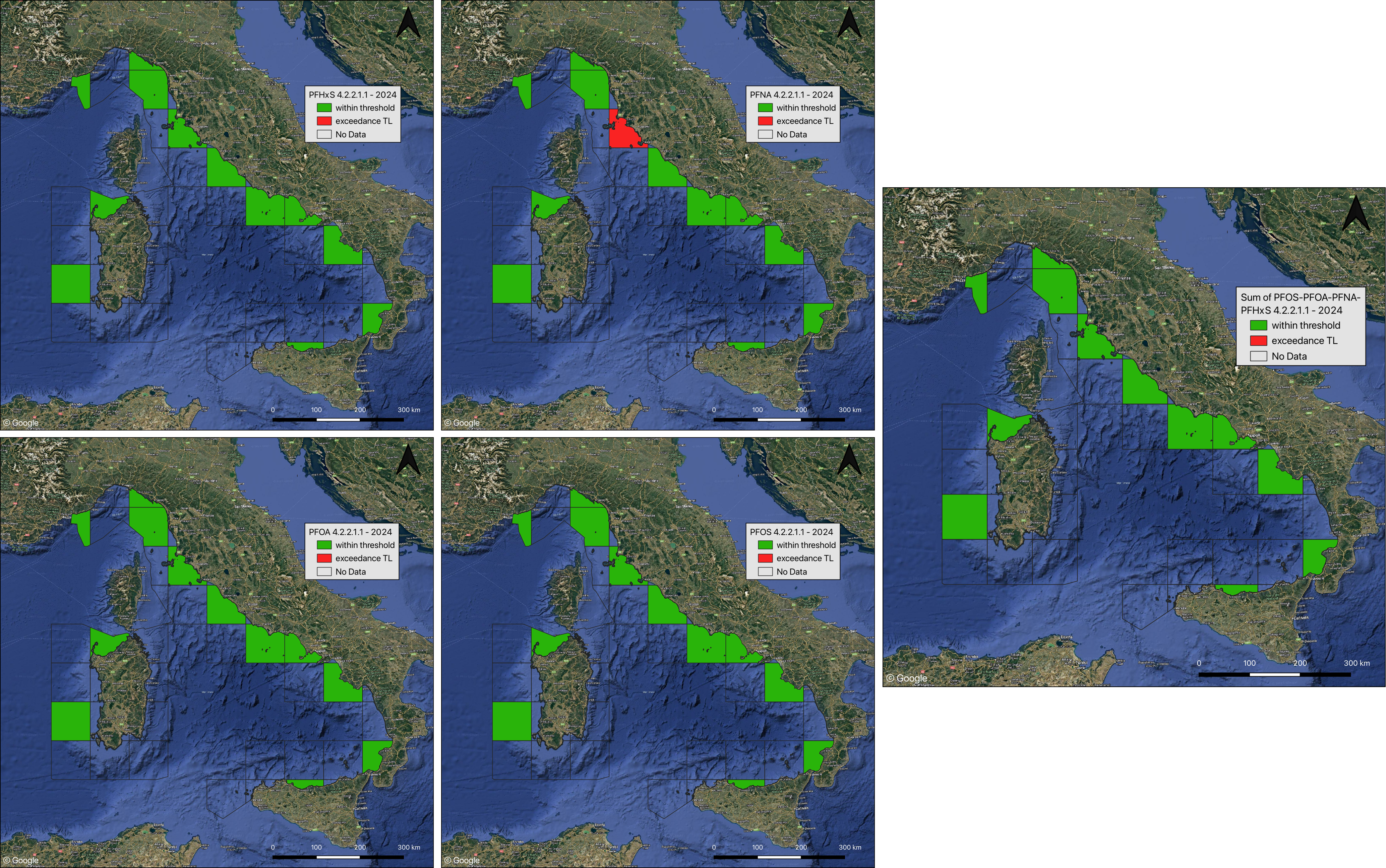
Figure 4: Evaluation of bioaccumulation (MSFD D9) of PFAS from 2024 data, according to the limits of Reg. (EU) 2023/915, in fish muscle Fonte
ISPRA |
Thumbnail
Titolo
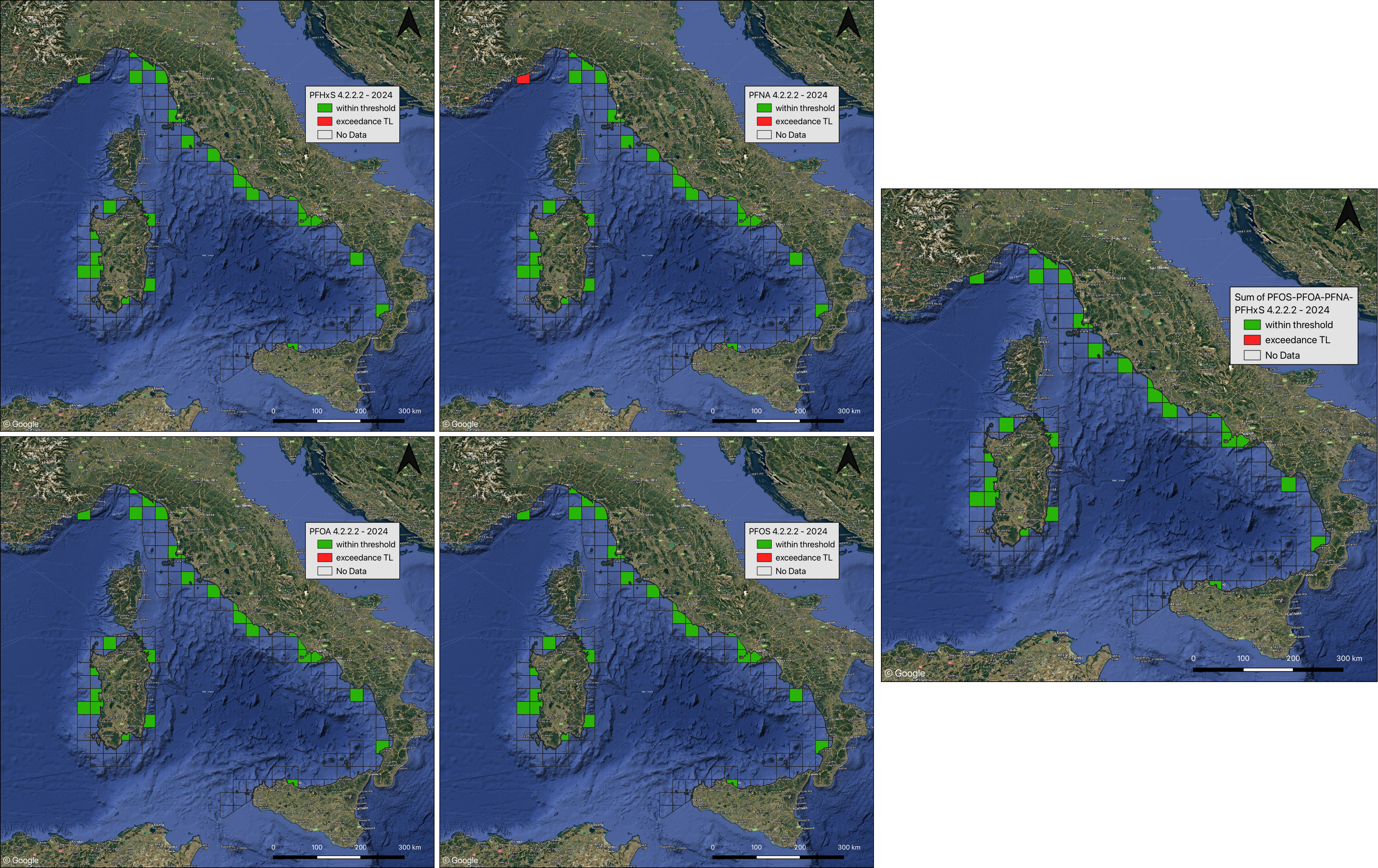
Figure 5: Evaluation of PFAS bioaccumulation from 2024 data (MSFD D9), according to the limits of Reg. (EU) 2023/915, in crustaceans and molluscs Fonte
ISPRA |
Thumbnail
Titolo
Figure 6: Judgment regarding the Effects measured in M. barbatus using the CBEI index. MWE subregion of the M. Mediterranean, sampled in 2024 (a) and 2021 (b) (MSFD-D8C2) Fonte
ISPRA |
Thumbnail
Titolo
Figure 7: Assessment of the state of the environment for the sediment matrix from 2024 (a) and 2021 (b) data (MSFD D8-C1) Fonte
ISPRA |
Not having all the data available at a regional level yet, the data from the monitoring carried out by the ARPA in 2024 were not included in this evaluation, but will be integrated into the next updates of the Environmental Indicators Database. The data collected by ISPRA and the Zooprophylactic Institutes in 2024 were compared with those collected in the campaigns carried out in 2021, the year in which monitoring of the same subregion was conducted.
Considering the biota matrix, a spatial coverage of more than 50% of the subregion area was not achieved (Table 1), necessary to express an evaluation on the GES. However, it is expected that coverage for 2024 will improve by including data collected by ARPAs in the evaluation. For the matrix Demersal fish (Figure 1a), the status is not good for the majority of cells covered by data, due to mercury contamination often exceeding the EQS set by Legislative Decree 172/2015. However, as already mentioned, mercury levels in biota are below the threshold values for the protection of human health as established by EU Regulation 2023/915.
From the comparison with the data collected in 2021 in the same subregion (Figure 1b), a stable trend emerges. For molluscs and crustaceans, where the evaluation is based on the bioaccumulation of PAHs, Dioxins and PCBs, it can be seen that all the cells investigated are in good condition (Table 2, Figure 2a), similarly to what was recorded in 2021 (Figure 2b).
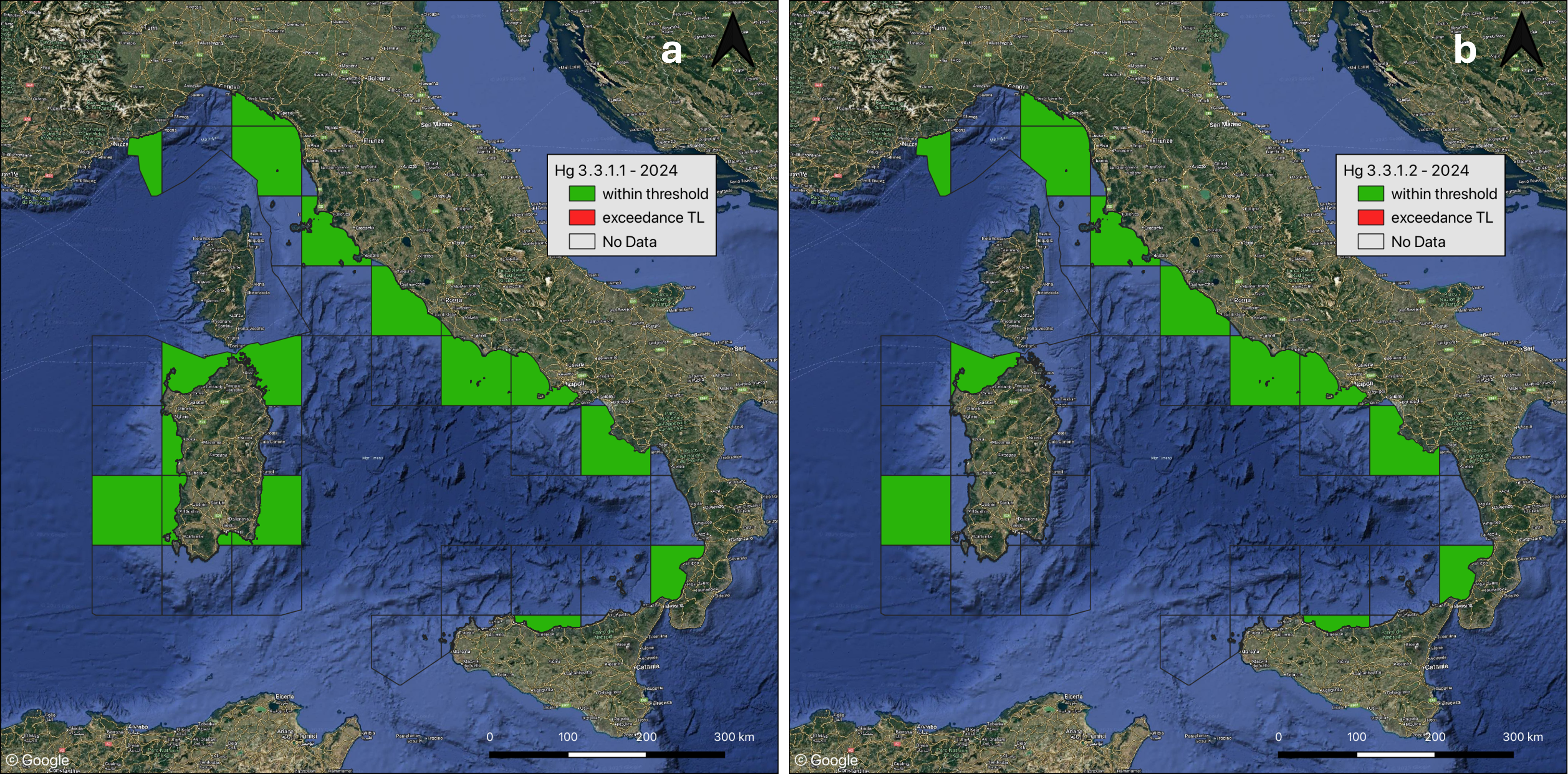
From the point of view of compliance with Regulation (EU) 2023/915, which establishes the maximum levels of contaminants in fishery products intended for human consumption, despite insufficient spatial coverage, the data collected in 2024 confirm a good status (Table 3), as already emerged in 2021. In both 2024 and 2021, very few exceedances were recorded for PAHs and mercury (percentage of compliant samples over 95% in 2024). From Figure 3, which shows the maps of the quality judgment for mercury, it can be seen that all the cells monitored in 2024 are in good condition. In 2024, the four PFAS (PFOS, PFOA, PFNA, PFHxS) were also monitored for which Regulation (EU) 2023/915 introduced maximum levels starting from 2023. For these contaminants, all the cells were in good condition both for fish muscle (Figure 4) and for molluscs and crustaceans (Figure 5), with the exception of one cell which showed an exceeding of the maximum content by the PFNA.
Regarding the evaluation of the effects measured in M. Barbatus , although the spatial coverage (< 50%) does not allow us to express a judgment regarding the achievement of the GES, a high percentage of cells in GOOD is observed (71%) (Table 4, Figure 6). The only critical issues detected were found in 2 areas (cells). In particular, in the fish sampled in the area located in the central Tyrrhenian Sea (orange cell), slight alterations are observed in various parameters which, overall, highlight a "moderate" level of stress. In the fish sampled in the area located in the northern Tyrrhenian Sea (red cell), however, a marked alteration of the physiological state is detected, with average LMS-ESO values (equal to 15.11±7.44 min) which highlight a "biologically relevant" toxic effect (exceeding the TBR threshold) and which are comparable with those measured in organisms of this species coming from particularly impacted areas (Viarengo et al., 2007; Zorita et al., 2008). Furthermore, in the fish of this area, genotoxicity and neurotoxicity effects are also noted, which highlight an overall "not good" state of health of these organisms. Further future investigations will allow us to identify the possible causes.
For the sediment matrix, there is a spatial coverage of 50% and the covered cells are mainly in the "moderate" class in 2024 (Table 5, Figure 7a), as they have recorded some exceeding of the environmental quality standards established by Legislative Decree 172/2015. These exceedances are found essentially in the areas closest to the coast and in western Sardinia. However, only one cell with a POOR rating is recorded.
Going back to the categories of contaminants that most influenced the presence of cells in a poor state, it is highlighted that the exceedances are essentially linked to metals and TBT.
Compared to 2021 (Figure 7 b), a slight worsening of the state of the environment is observed for this matrix, to be verified with the integration of data from regional agencies.