Roberta De Angelis
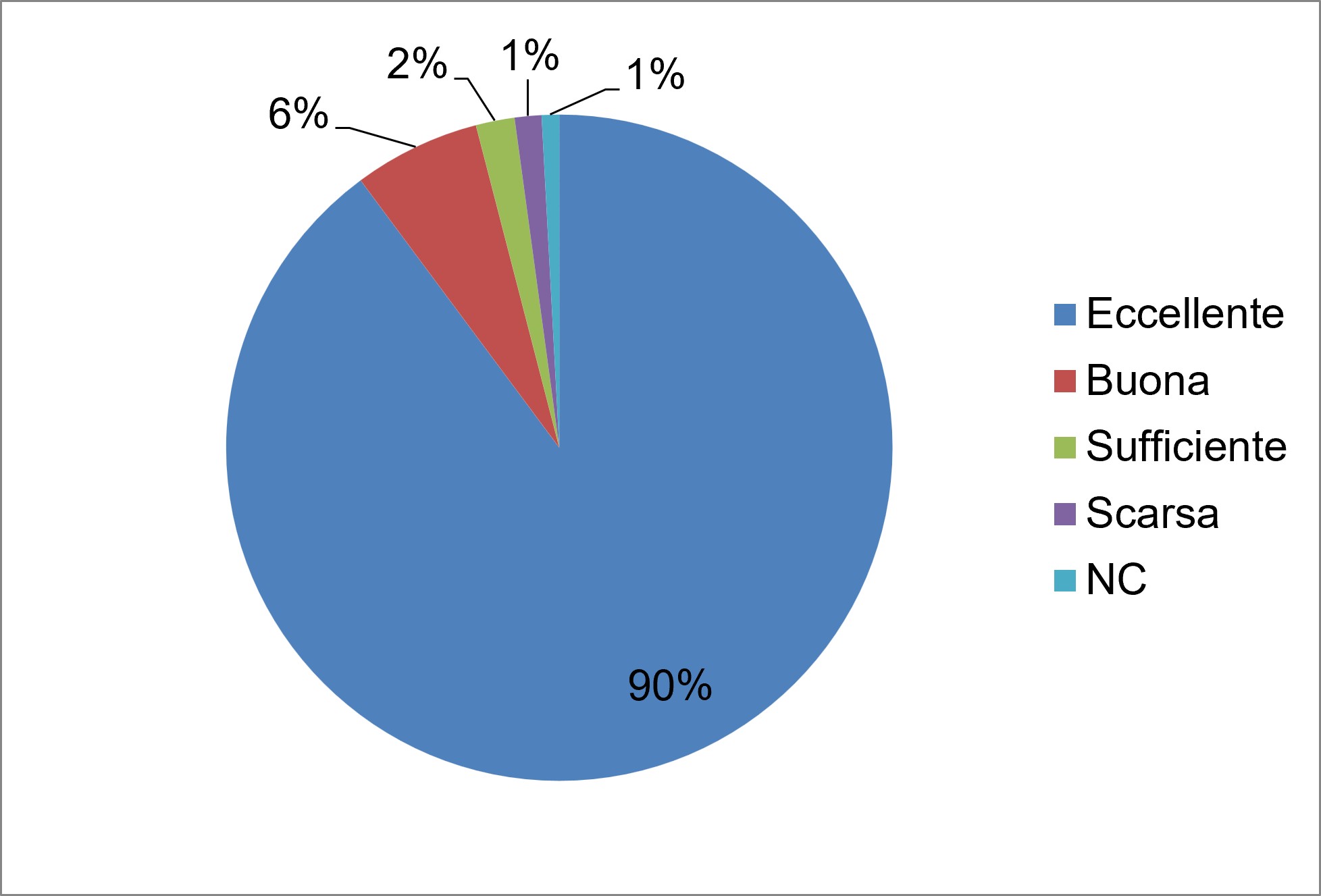
The quality of bathing water is essential for safeguarding the health of citizens and also plays an important role in protecting the natural environment and the economic aspects of the tourism sector. For this reason, specific monitoring is carried out throughout the bathing season. For the 2025 bathing season, over 36,505 sea and lake water samples were collected and analyzed from a total of over 6,900 km of bathing coastline. A total of 5,535 sampling points, representative of an entire bathing area, were collected. The monitoring results guarantee the suitability of the water for bathing during the season and are used at the end of the season to classify the water. The classification was based on the results of the monitoring conducted during the 2025 bathing season and those of the three previous seasons (2022, 2023, and 2024). At the national level, most waters are classified as excellent (90%), however, critical issues remain due to the presence of waters classified as poor (1%) and unclassifiable (1%), for which it is not possible to express a quality assessment. At the regional level, the percentage of waters classified as excellent is the highest, exceeding 90% in 10 regions.
Directive 2006/7/EC on the management of bathing water quality, transposed into Italian law by Legislative Decree No. 116 of 30 May 2008 and implemented by the Ministry of Health Decree of 30 March 2010, requires that each water be assigned a quality class (excellent, good, sufficient, and poor). The indicator reports the number of waters falling into each class, at national and regional level, and is calculated on the basis of "seasonal information" (Table 2, Annex F, Ministerial Decree of 30 March 2010) that the Ministry of Health annually transmits to SINTAI pursuant to art. 6 of the Ministerial Decree of 30 March 2010. For 2024, the data provided by the SNPA collected as part of the bathing activity line pertaining to the marine, marine-coastal, and transitional waters thematic network (RRTEM_10) were also used. In calculating the quality status, in some cases, waters were considered as groupings following the occurrence of adjacent waters with uniform characteristics (Article 7, paragraph 6, Legislative Decree 116/2008). This could lead to differences in the number of waters listed among various sector publications. It provides an indicative description of the microbiological quality status of bathing waters; however, it does not offer any indication of possible impacts from other sources of pollution.
Evaluating the suitability of a water for bathing purposes, associated with a health risk, and providing information about the presence of microbiological contamination. On the one hand, it provides environmental information on the level of microbiological contamination (fecal pathogens), and on the other, it expresses the probability of contracting a disease associated with the aforementioned contamination during recreational activities (the probability increases from excellent to poor). Furthermore, it allows for an indirect estimate of the effectiveness of wastewater treatment systems and for evaluating the effectiveness of any remediation measures adopted over time. In fact, the legislation requires that improvement measures be implemented so that bathing waters are at least of a sufficient class and, in any case, each water can improve its quality status or maintain it if it is already excellent.
The indicator meets the requirements of European Directive 2006/7/EC, which requires seasonal monitoring of bathing waters and their classification based on four years of monitoring data. The directive's goal is to eliminate poor-class waters and increase the number of excellent-class waters.
It provides an indicative description of the microbiological quality of bathing water, but does not provide any indication of possible impacts from other sources of pollution.
None
EEA
SNPA
Used SNPA data collected within the Bathing Activity Line belonging to the RRTEM_10 thematic network and downloadable data from the European Environment Agency:
National, Regional
2013-2025
Number of waters in excellent and poor class
The indicator is developed by grouping bathing waters belonging to each quality class at the regional and national levels. The classification is based on monitoring results from the 2022, 2023, 2024, and 2025 campaigns.
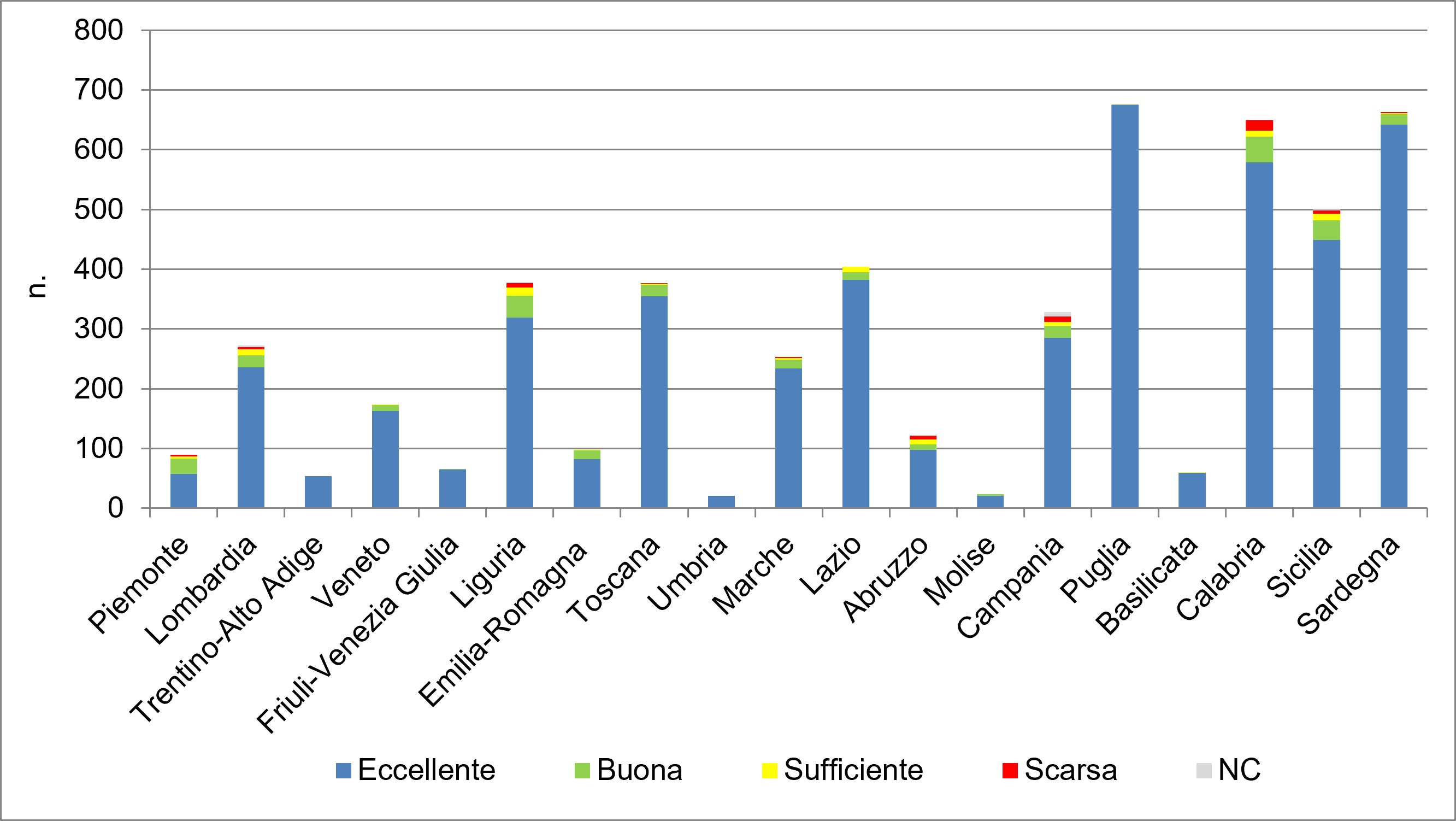
As shown in Figure 1, at the national level, the percentage of waters classified as excellent is 90%. At the regional level (Figure 2), and in general, it can be said that the number of waters classified as excellent and good is very high in all regions. However, the presence of poor waters in 10 regions prevents the directive's objective from being fully achieved.
With 90% of waters classified as "excellent", Italy exceeds the European Union average (85%) by almost 5 percentage points, placing it in 8th place in the overall ranking of European countries.
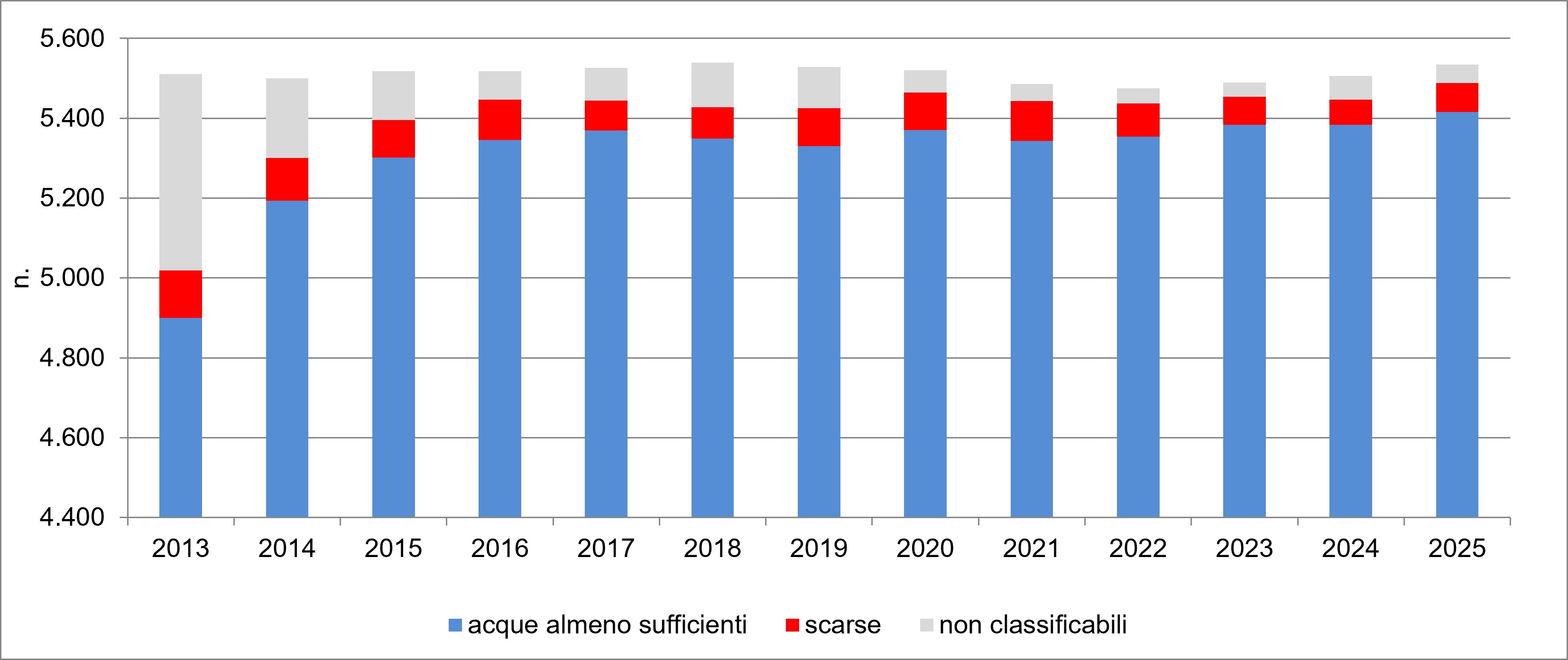
As can be seen from Figure 3, the trend was positive until 2017, with waters classified as poor decreasing and higher-quality waters, especially excellent and good, increasing. From 2017 to 2019, a reversal occurred: waters classified as excellent decreased and those classified as poor increased. In 2020, a slight improvement was noted: waters classified as poor decreased again while those classified as higher-quality, especially excellent, increased. In 2023, the improving trend was confirmed due to the increase in the number of waters classified as good and excellent and the decrease in waters classified as poor and unclassifiable, demonstrating that this latter category of waters often contains waters of superior quality and not necessarily poor. In 2025, a generally positive trend is confirmed, considering that the number of water bodies classified as at least sufficient (excellent, good, and sufficient) reaches 5,416. However, an increase in water bodies classified as poor should be noted, from 63 (2024) to 72 (2025). This result is presumably related to the suffering of some areas during intense and violent rainfall.
| Data |
|---|
Thumbnail
Headline
Figure 1: National classification of bathing waters 2022 - 2025 Data source
EEA/SNPA |
Thumbnail
Headline
Figure 2: Regional classification of bathing waters 2022_2025 Data source
EEA/SNPA Note
The total bathing waters differ from the national one as data for Sicily is missing |
Thumbnail
Headline
Figure 3: Trends in bathing water classification Data source
ISPRA processing on EEA/SNPA data |
During the 2025 bathing season in Italy, 5,535 bathing waters were classified as excellent, of which 4,972 were classified as good, 340 as good, 104 as sufficient, and 72 as poor. The number of unclassified waters is 47, and it is not possible to make any assessment for these. In all regions, the number of excellent waters is higher than the other classes, and if the waters classified as good are also included, this figure approaches almost all classified waters. Waters classified as poor are present in varying numbers in the following regions: Piedmont, Lombardy, Liguria, Marche, Abruzzo, Campania, Calabria, Sicily, and Sardinia. In some regions, there are still unclassifiable waters for which it was not possible to express a quality assessment for various reasons, primarily because they are newly identified waters and have not reached the minimum number of samples required for classification. The deterioration of bathing water quality is attributable to several factors, the most important of which remains the functionality of purification systems. Bathing water monitoring assesses the presence of fecal contamination, primarily from urban wastewater. When factors compromise their effectiveness, such as breakdowns or heavy rainfall, these systems release untreated wastewater into the environment, compromising bathing safety. One example is the heavy rainfall of recent seasons, which has disrupted several purification plants, resulting in the discharge of untreated wastewater. Unfortunately, these events hinder the achievement of the directive's objective and call attention to better management of the land to which bathing water belongs, also in light of climate change. Overall, the results of the monitoring carried out during the 2025 season showed a slight improvement, due to the maintenance of the high number of waters in the excellent and good classes. This is the result of the implementation of effective management measures, implemented by an increasing number of regions to protect the health of bathers and the entire aquatic ecosystem.