Daniela Berto, Nicoletta Calace, Pasquale Lanera, Erika Magaletti, Alessandra Nguyen Xuan
Eutrophication is a process caused by the enrichment of nutrients, in particular nitrogen and phosphorus compounds, which determines an increase in primary production and algal biomass with consequent alteration of benthic communities and, in general, a decrease in water quality. The release of nitrogen and phosphorus into the marine and coastal environment can derive from diffuse sources (river loads, main collectors of agricultural activities and civil discharges) and from point sources (discharges deriving from wastewater treatment plants, industrial and deriving from aquaculture activities).
The assessment of eutrophication of marine waters according to the Marine Strategy is carried out every six years using a combination of information on nutrient levels (concentrations in the marine environment), the primary effects of nutrient enrichment (chlorophyll 'a' concentration as an indicator of algal biomass) and the secondary effects of nutrient enrichment (impacts on organisms caused by hypoxia and/or anoxia phenomena in bottom waters) that are ecologically relevant.
The most recent assessment transmitted by Italy to the European Commission (October 2024) refers to the six-year period 2016-2021 and highlighted the achievement of Good Environmental Status. The analysis of 2022 monitoring data confirms this indication.
Eutrophication consists of a chain process characterized by different phases: a) enrichment of water with nutrients, in particular nitrogen and/or phosphorus compounds; b) increase in primary production and algal biomass favored by the abundance of nutrients; c) accumulation of organic substance deriving from algal biomass not consumed sufficiently by the higher trophic levels that feed on it; d) hypoxia/anoxia phenomena of the bottom waters due to the mainly aerobic digestion of the organic substance by the bacterial communities with consequent consumption of oxygen; e) possible states of suffering of the benthic communities and deaths of fish following the hypoxia/anoxia phenomena of the bottom waters.
The indicator is included as a Descriptor within Directive 2008/56/EC and is part of the 11 qualitative Descriptors for which Good Environmental Status (GES) must be achieved in each of the three marine sub-regions (Adriatic Sea, Ionian Sea and Central Mediterranean Sea, and Western Mediterranean Sea). The Directive requires, for Descriptor 5, that human-caused eutrophication is minimised, in particular its negative effects, such as loss of biodiversity, ecosystem degradation, harmful algal blooms and oxygen deficiency in bottom waters.
Represent the phenomenon of eutrophication which consists in an enrichment of water nutrients, in particular the concentration of nitrogen and phosphorus, which in turn can determine the increase in phyto-plankton production and algal biomass with consequent hypoxia or anoxia phenomena in the bottom waters.
The Marine Strategy Framework Directive (MSFD, 2008/56/EC), implemented by Legislative Decree 190/2010, has as its objective the achievement of Good Environmental Status (GES) according to the criteria and methodological standards established by the European Commission Decision of 17 May 2017 (EU Decision 2017/848). The threshold values used to evaluate the environmental state of marine waters for each variable considered are shown in Table 2. In particular, for Italian waters, the achievement of GES or not is assessed using a multiparametric index that equally weighs the 3 primary criteria of EU Decision 2017/848, namely nutrient concentration, surface concentration of chlorophyll 'a' and dissolved oxygen concentration of bottom waters.
The Water Framework Directive (WFD, 2000/60/EC) implemented by the consolidated environmental text Legislative Decree 152/2006 and subsequent amendments. Aims to protect and improve the state of water resources by ensuring their long-term sustainable use. The main objectives are the achievement of "good status" of the waters, both in terms of chemical and ecological quality, associated with the reduction of anthropic pressures characterized by point and diffuse sources.
The Nitrates Directive (91/676/EEC) has the aim of protecting waters from pollution caused by nitrates of agricultural origin, by implementing monitoring programs for surface and underground waters falling in portions of territory which are, among other things, subject, or potentially subject, to eutrophication phenomena. It provides for the implementation of measures aimed at improving water quality.
The Urban Waste Water Directive (91/271/EEC) has, among other purposes, that of protecting waters from pollution caused by nutrients of civil origin. The revision of the Directive is being concluded which will provide for further measures to contain the release of nutrients into waters.
Giovanardi, F., Francé, J., Mozetič, P., & Precali, R. (2018). Development of ecological classification criteria for the Biological Quality Element phytoplankton for Adriatic and Tyrrhenian coastal waters by means of chlorophyll a (2000/60/EC WFD). Ecological Indicators , 93, 316-332.
Giani, M., Pavlidou, A., Kralj, M., Varkitzi, I., Borja, A., Menchaca, I., Lipize, M., Patescano, E., Urbini, L., Francé, J. Magaletti, E., Nguyen Xuan, A., Lanera, P., Skejic, S., Ivankovic, D., Gladan, Z. N., Matijevic, S., Patanzi, M., Pagou, K. (2024). Assessment of the eutrophication status at Mediterranean sub-basin scale, within the European Marine Strategy Framework Directive. Science of The Total Environment, 173876. https://doi. org/10.1016/j. scitotenv.2024.173876
Italy MSFD Report 2018 - https://strategiamarina. isprambiente. it/report-comunitari/msfd-paper-report-2018/
Italy Report MSFD 2024- https://strategiamarina. isprambiente. it/report-comunitari/msfd-paper-report-2024/
UNEP/MAP (2017). Integrated Monitoring and Assessment Program of the Mediterranean Sea and Coast and R, Appendix 2. Athens, Greece.
UNEP/MED WG.563/7 (2023). New/Updated IMAP Assessment Criteria for Nutrients, Contaminants and Marine Litter within the framework of preparation of the 2023 MED QSR.
SNPA
Copernicus Marine Service - https://marine. copernicus. eu/it
MSFD Monitoring Data: SIC Centralized Information System - http://www. db-strategiamarina. isprambiente. it
Copernicus Marine Service - https://marine. copernicus. eu/it
National
2022
To estimate the concentrations of chlorophyll 'a' (Chla), dissolved inorganic nitrogen (DIN), total phosphorus (TP) and background dissolved oxygen, the products of the Copernicus Marine Service based on modeling were used for both the physical component (Med‐MFC) and the biogeochemical component (MedBFM3), corrected within 12 nautical miles from the coast with the in situ data of the monitoring conducted by the ARPA pursuant to of Directive 2008/56/EC. DIN is calculated as the sum of the inorganic nitrogen present in water in the chemical forms of ammonium ion (N-NH 4) and nitrate ion (N-NO 3) since the nitrite ion (N-NO 2) was always present in very low concentrations. To assign the Good/notGood status to each parameter, the type-specific threshold values (see Table 1) reported in Table 2 were used. These threshold values were defined at EU and/or Mediterranean level (Barcelona Convention).
The assessment of good environmental status pursuant to Directive 2008/56/EC (GES/noGES) is carried out every six years. The most recent assessment was transmitted by Italy to the European Commission on 10 October 2024 and relates to the period 2016-2021.
For 2022, the annual assessment of the environmental state (Good/notGood) is reported, carried out by adopting the same methodological approach as the six-yearly assessment, i. e. The use of a multiparametric index that equally weighs the 3 primary criteria of EU Decision 2017/848: surface concentration of nutrients, surface concentration of chlorophyll 'a' and concentration of dissolved oxygen in bottom waters.
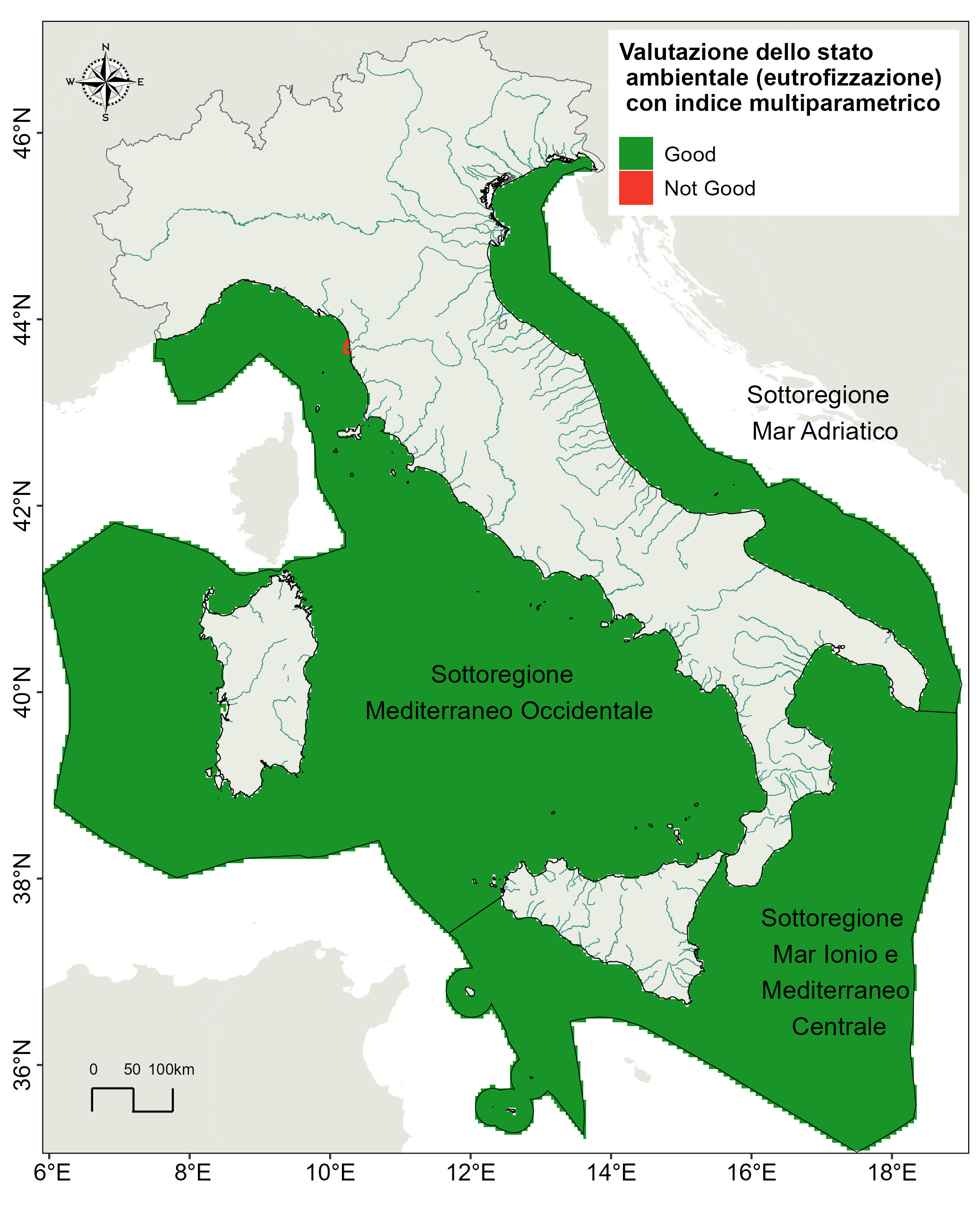
The overall assessment (Good/notGood) of the environmental state relating to eutrophication for 2022 did not highlight any particular critical situations (Figure 1).
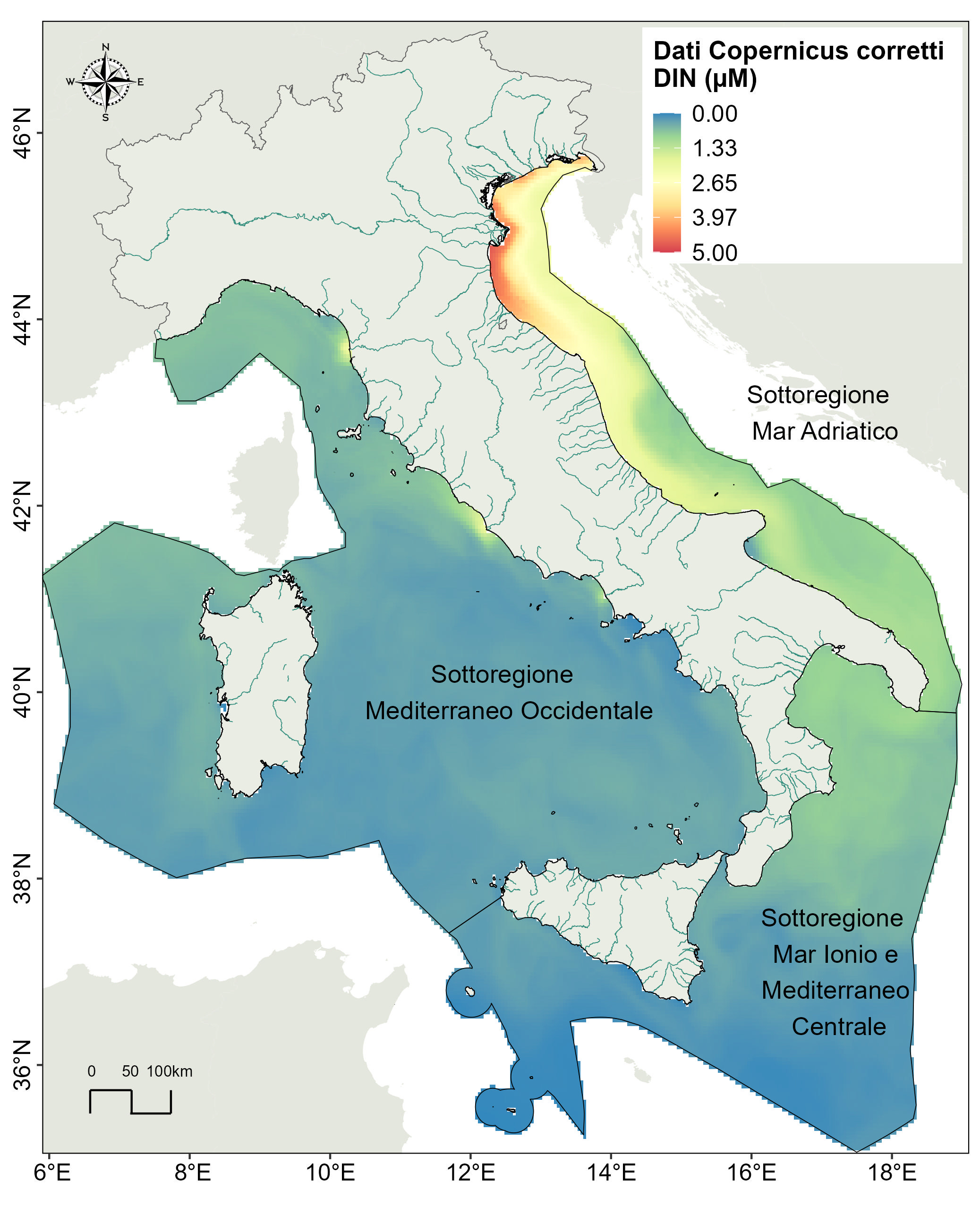
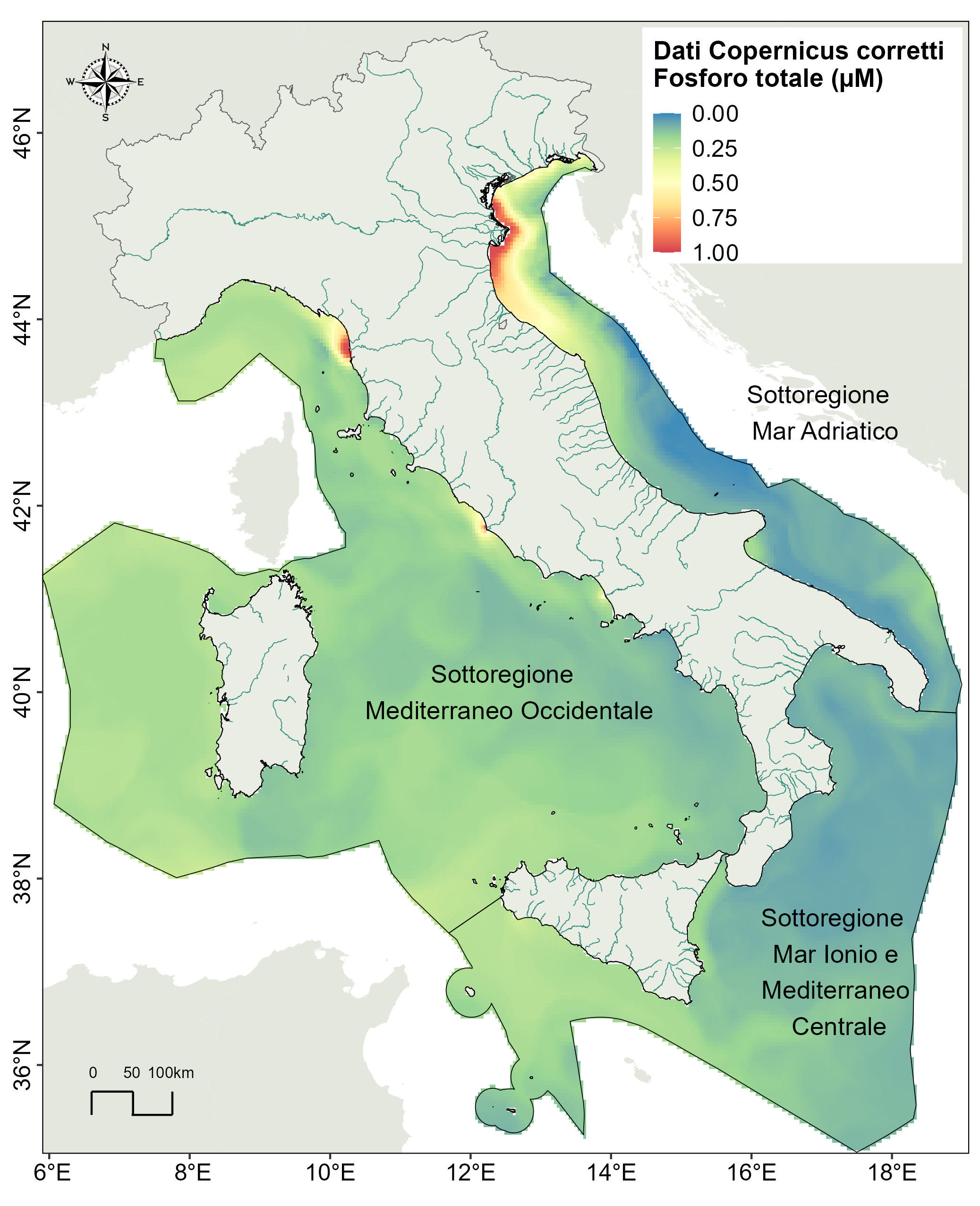
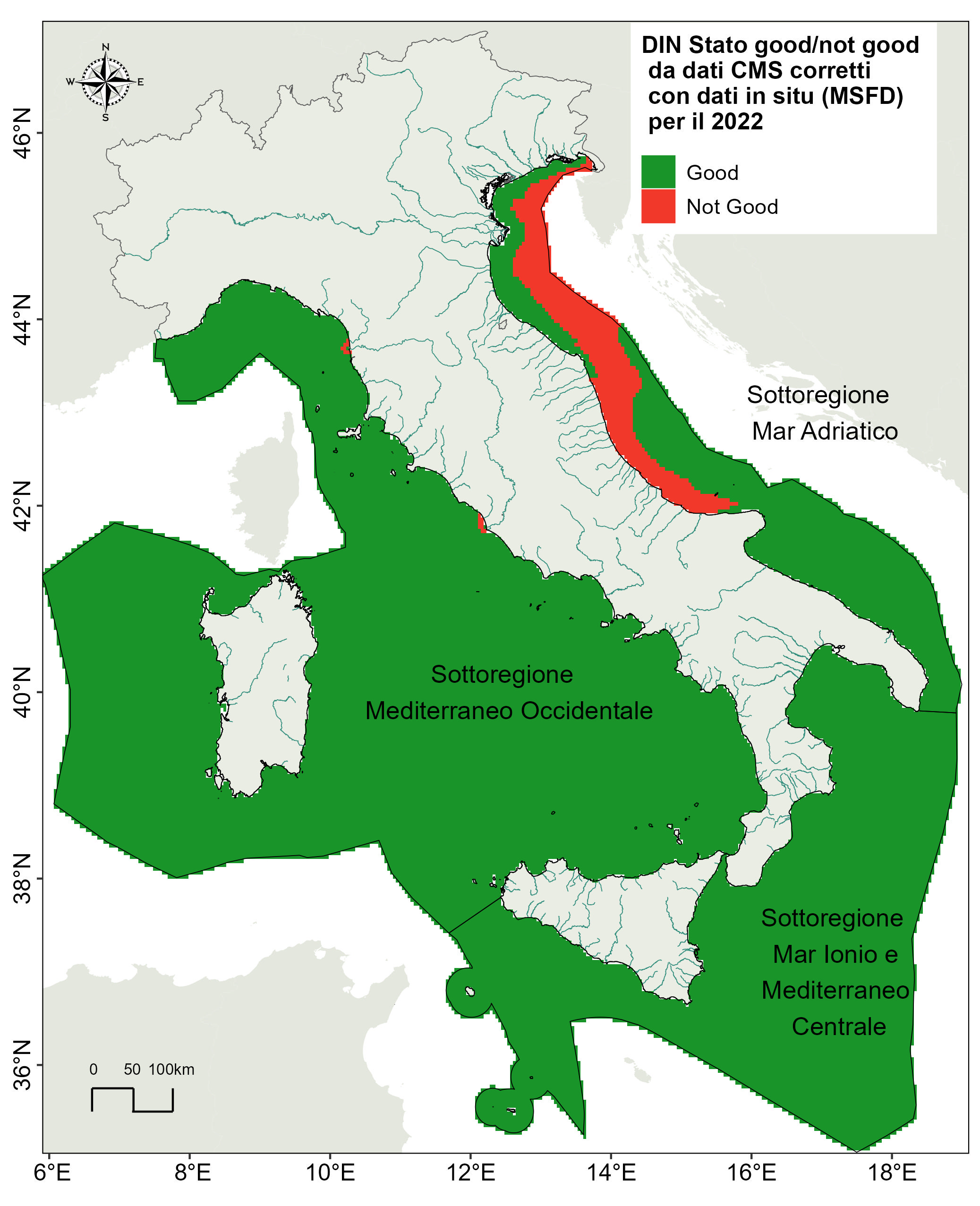
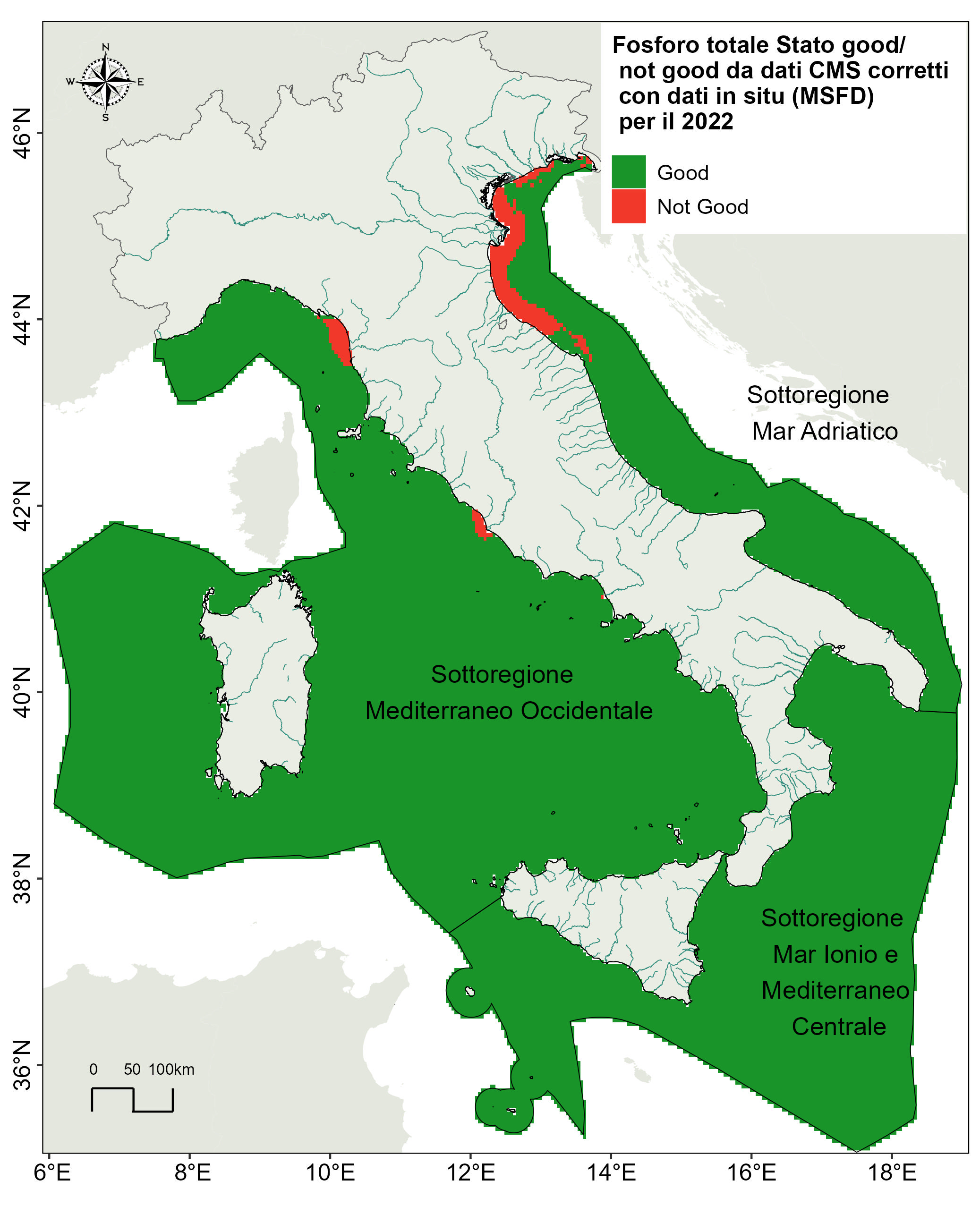
The distribution of nutrients (DIN and TP, Figures 6 and 7) highlights the achievement of good status for all waters except in some areas of the Adriatic and in very limited areas of the Tyrrhenian Sea, where the aforementioned parameters exceed the threshold values (Table 2). This result is attributable to the nitrogen and phosphorus loads.
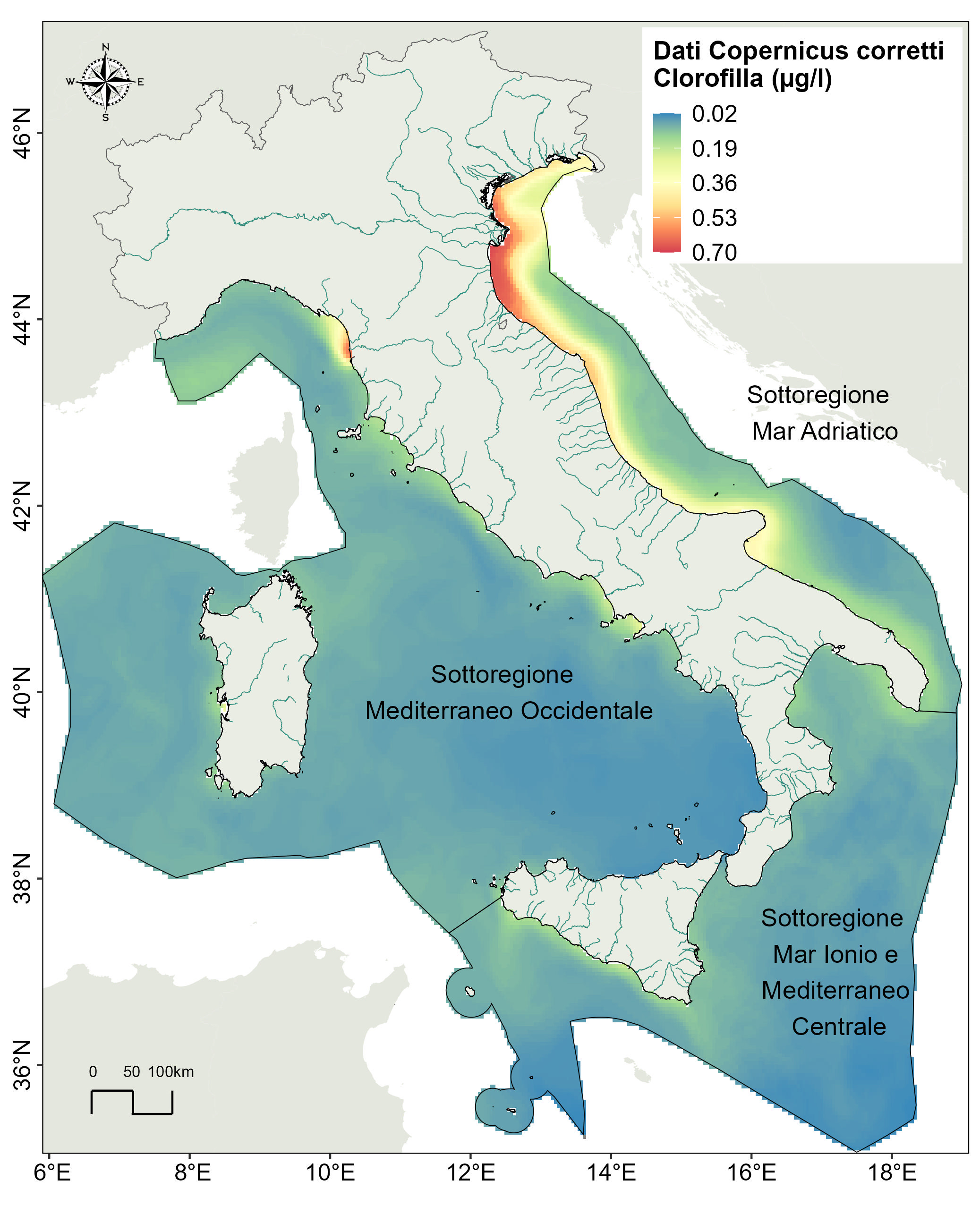
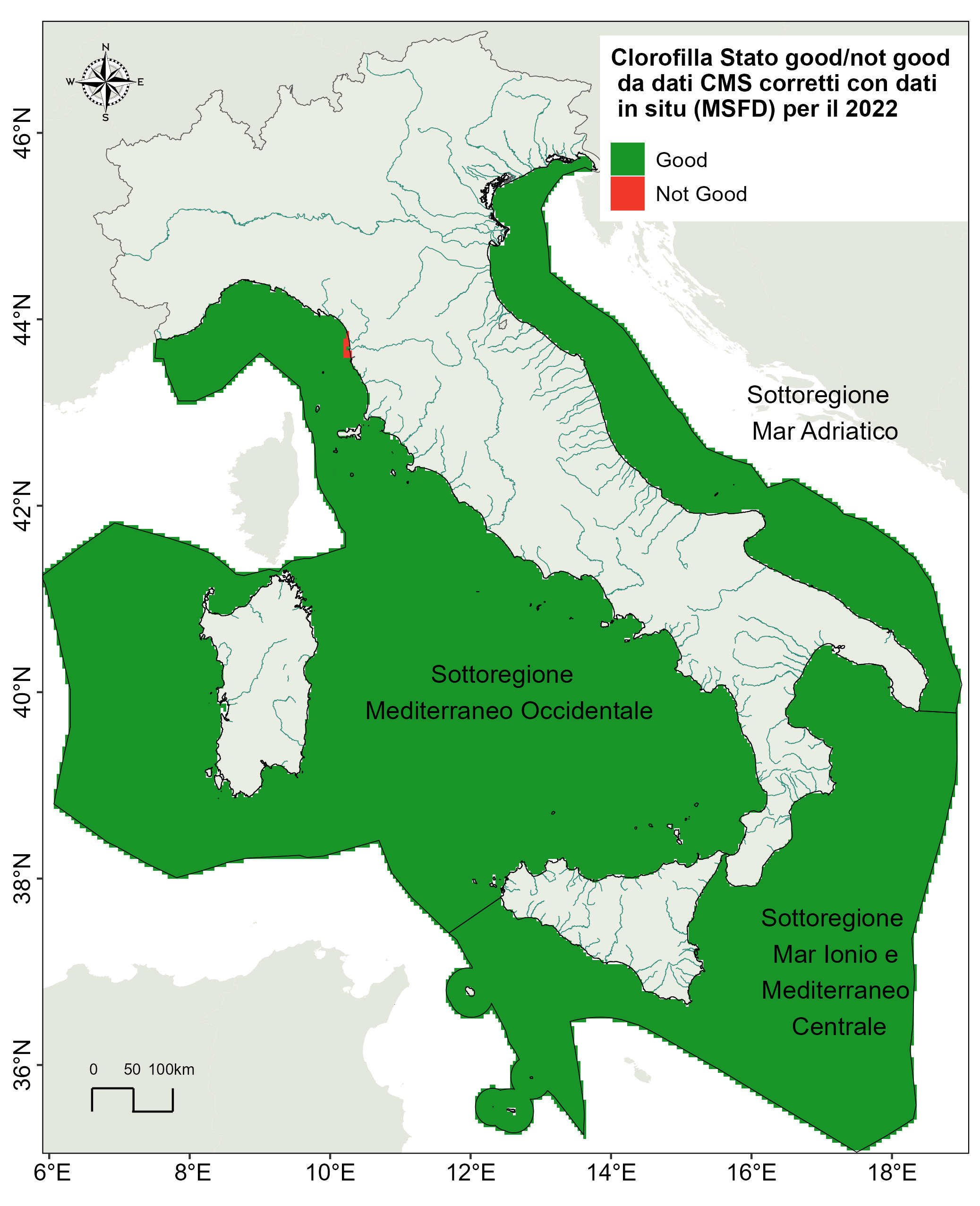
The distribution of chlorophyll 'a' (Figure 8) highlights the achievement of good status for all waters with the exception of a small area in the Tyrrhenian Sea, overlooking the mouth of the Arno river, where the threshold values have been exceeded (Table 2).
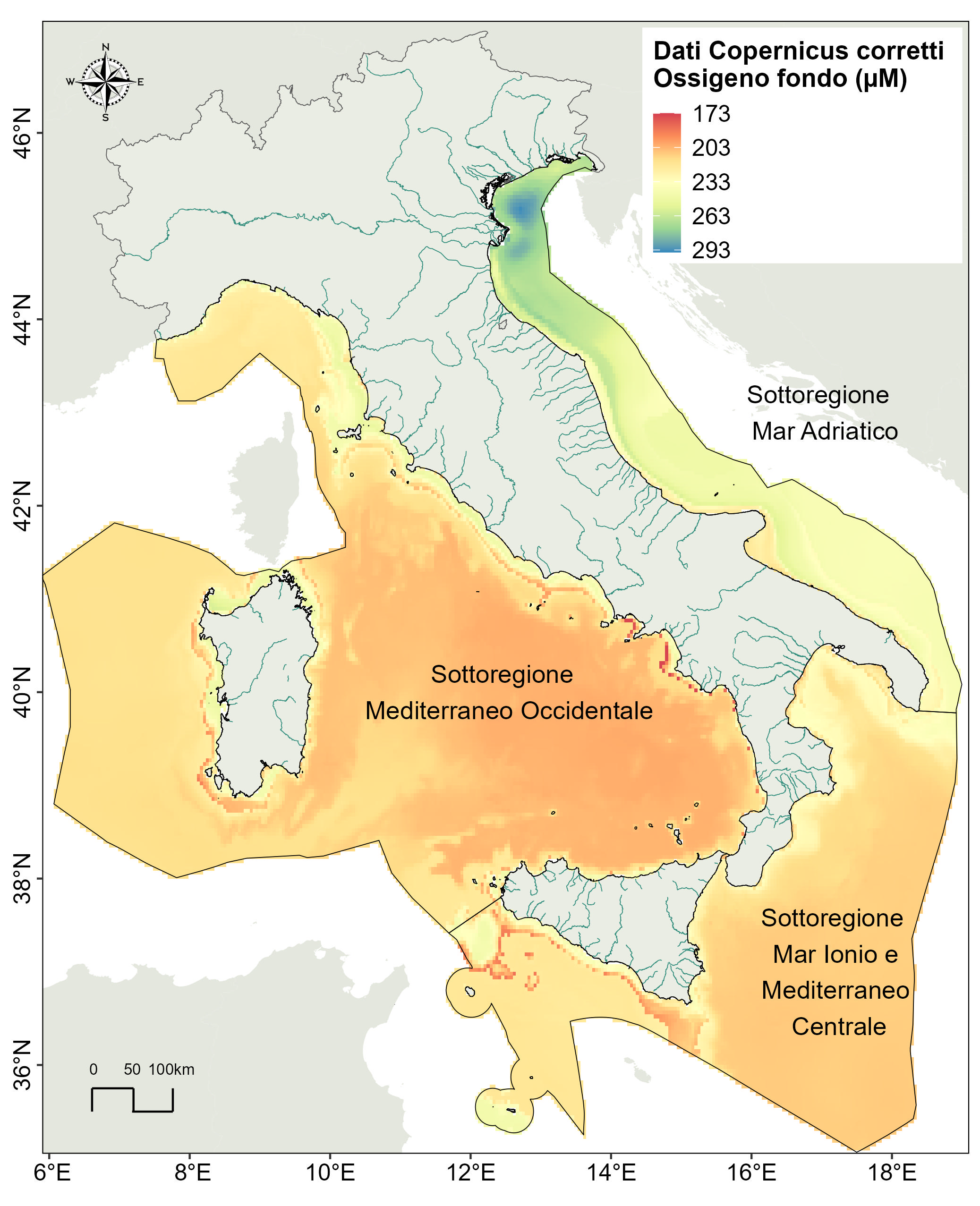
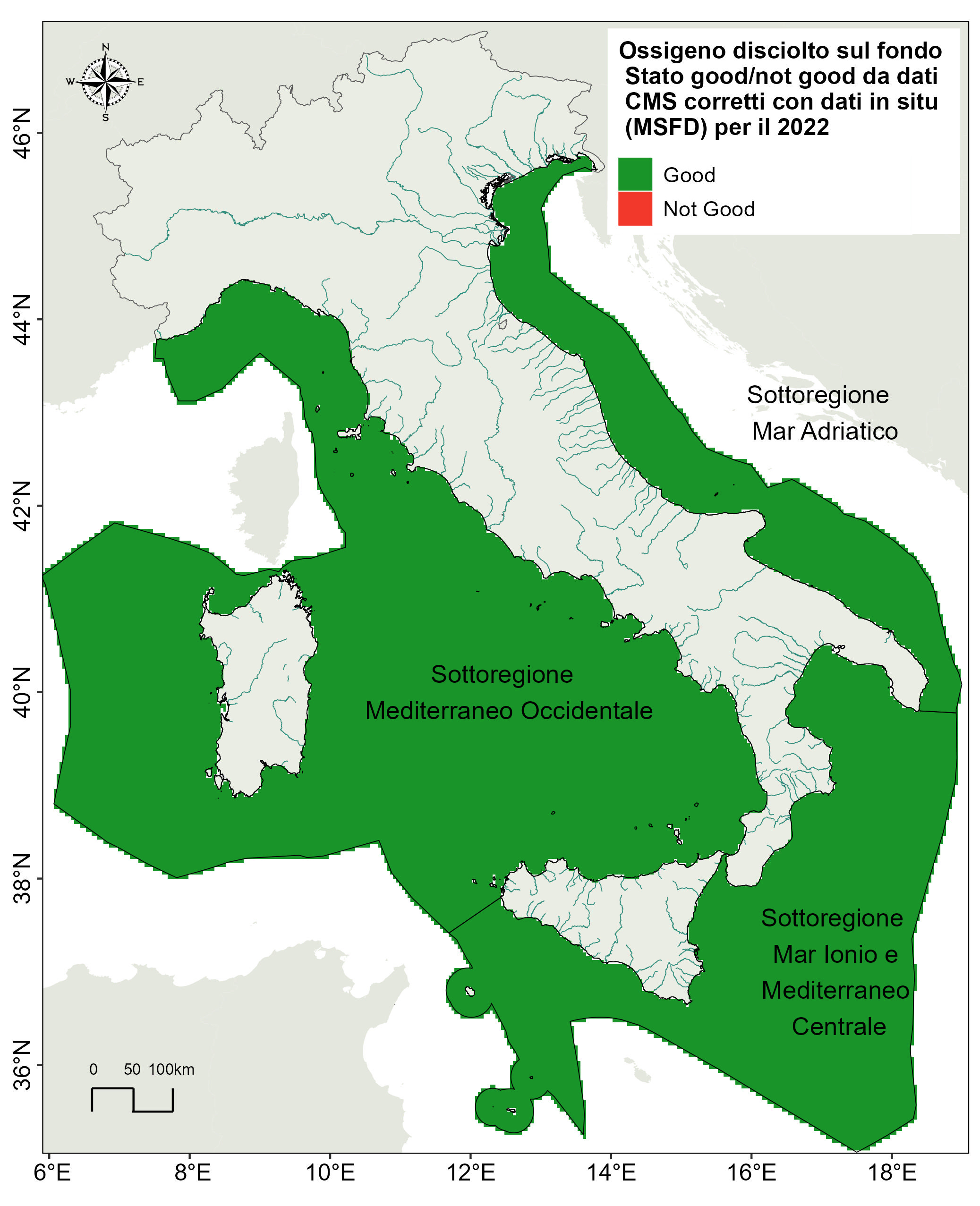
The distribution of background dissolved oxygen (Figure 9) shows a good state with high oxygenation of the water, i. e. With values higher than the threshold value of 3 mg/L. Dissolved oxygen values lower than this threshold correspond to conditions of hypoxia or anoxia.
-
| Data |
|---|
Thumbnail
Headline
Figure 1: Assessment of the environmental state (eutrophication) with multiparametric index (2022) Data source
OGS processing of SNPA data and Copernicus Marine Service products |
Thumbnail
Headline
Figure 2: Surface concentration of dissolved inorganic nitrogen (DIN in μmol/l) in marine waters (2022) Data source
OGS processing of SNPA data and Copernicus Marine Service products |
Thumbnail
Headline
Figure 3: Surface concentration of total phosphorus (TP in μmol/l) in marine waters (2022) Data source
OGS processing of SNPA data and Copernicus Marine Service products |
Thumbnail
Headline
Figure 4: Surface concentration of chlorophyll 'a' (Chla in μg/l) in marine waters (2022) Data source
OGS processing of SNPA data and Copernicus Marine Service products |
Thumbnail
Headline
Figure 5: Dissolved oxygen concentration (DO in μmol/l) in bottom water (year 2022) Data source
OGS processing of SNPA data and Copernicus Marine Service products |
Thumbnail
Headline
Figure 6: State of dissolved inorganic nitrogen (DIN) in marine waters (2022) Data source
OGS processing of SNPA data and Copernicus Marine Service products |
Thumbnail
Headline
Figure 7: State of total phosphorus (TP) in marine waters (2022) Data source
OGS processing of SNPA data and Copernicus Marine Service products |
Thumbnail
Headline
Figure 8: Chlorophyll 'a' (Chla) status in marine waters (2022) Data source
OGS processing of SNPA data and Copernicus Marine Service products |
Thumbnail
Headline
Figure 9: State of dissolved oxygen (DO) in bottom waters (2022) Data source
OGS processing of SNPA data and Copernicus Marine Service products |
Headline
Table 1: Water typing Data source
UNEP-MAP, 2017 |
Headline
Table 2: Threshold values for assigning the environmental status Good/notGood to the parameters DIN, Total phosphorus, Chlorophyll 'a', and dissolved oxygen at the bottom Data source
Giovanardi et al., 2018. Giani et al., 2024. UNEP/MED, 2023. Italy MSFD Report 2018 |
The parameters considered to describe the phenomenon of eutrophication showed, in general, a good state as they were lower than the reference values considered ( the exception is DIN in the upper and middle Adriatic and TP in the upper Adriatic). The threshold values currently used to distinguish Good from notGood status should not necessarily be considered definitive. They represent a starting point based on available scientific knowledge, but may be subject to future investigations and revisions. This refinement process is necessary to ensure that the parameters adopted accurately and updated reflect the dynamics of marine ecosystems, taking into account new scientific evidence and methodological progress in the field of environmental research.